Federal Intervention Sought in New York Scaffold Law Debate
A growing coalition is advocating for federal intervention in New York’s unique scaffold law, a regulation that significantly impacts construction costs and, consequently, the need for skilled personal injury attorney representation in construction site accidents. The conventional wisdom suggests a negative answer when a headline poses a question, but in this case, the debate is very much alive.
The Scaffold Law: A Unique Liability Standard
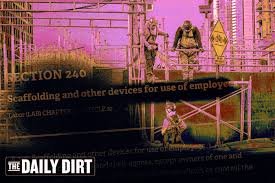
New York’s scaffold law holds owners and general contractors fully liable for gravity-related injuries on construction sites. This “absolute liability” standard differs drastically from other states that employ a comparative negligence standard, where fault is assessed, and employer liability is reduced if the employee contributed to the accident. Opponents argue the law drives up construction costs, while proponents maintain it’s crucial for worker safety. This difference often necessitates the involvement of a specialized personal injury attorney when accidents occur.
Rising Construction Costs & Insurance Premiums
The Building Trades Employers’ Association estimates that insurance accounts for 8 to 10 percent of total construction costs in New York, compared to just 2 to 4 percent in states with comparative negligence. This substantial difference is a key driver behind the push for reform.
Federal Preemption: A Potential Solution
Build More New York, a statewide coalition, is focusing its efforts at the federal level. Representative Nick Langworthy has proposed the Infrastructure Expansion Act, which would preempt the scaffold law on projects receiving federal funding. This means a comparative negligence standard would apply instead of absolute liability, potentially lowering costs for housing projects, particularly those utilizing federal low-income housing tax credits. Understanding the implications of this law is crucial for any personal injury attorney handling construction site cases.
Past Attempts and Current Obstacles
John Faso, a former New York congressional representative now advising the coalition, proposed similar legislation in 2017. He believes federal preemption is the only viable path forward, citing a lack of political will within New York State. He notes that “trial lawyers and the building trades have a hammer lock on the state legislature.”
Union Opposition and Future Prospects
Construction unions strongly oppose the federal proposal, arguing it undermines worker protection and state autonomy. Gary LaBarbera, President of the Building and Construction Trades Council, has defended the scaffold law as “a beacon of construction site safety and contractor accountability for more than a century.” The coalition hopes to attach the Infrastructure Expansion Act to a must-pass bill, such as the surface transportation authorization bill, which is due for renewal in September.
Other New York News
- The city held its first rental ripoff hearing, with more events planned.
- The Department of Records offers an interactive map of the city’s honorific street names.
- Mayor Mamdani appointed Kenny Minaya as the new commissioner of the Department of Small Business Services.
- The City Council is considering a bill to ban biometric data collection by stores.
- The mayor is using the encrypted messaging app Signal for government communications.
Recent Real Estate Transactions
Residential: A condominium unit at 56 Leonard Street sold for $7.5 million.
Commercial: A multifamily portfolio in Flatbush was sold for $79.9 million.
New to the Market: A townhouse at 21 Beekman Place is listed for $27.5 million.
Source: The Real Deal
Disclaimer: This article provides general information and should not be considered legal advice. If you have been injured on a construction site, it is essential to consult with a qualified personal injury attorney.
Occupational Safety and Health Administration (OSHA) – For information on construction site safety regulations.
Nolo – Personal Injury Law – A resource for understanding personal injury claims.