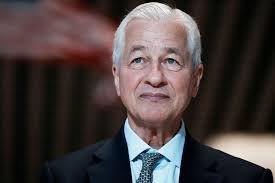
JPMorgan Chase: Jamie Dimon Warns of Economic Risks Amidst Global Uncertainty
JPMorgan Chase CEO Jamie Dimon has issued a stark warning about the potential for economic turmoil, highlighting the risks posed by escalating geopolitical tensions, particularly the US-Israeli conflict with Iran, and the resurgence of persistent inflation. His annual letter to shareholders, released Monday, paints a complex picture of the US economy, balancing optimism with cautious concern.
Geopolitical Risks and Inflationary Pressures
Dimon warns that a widening conflict involving Iran could trigger significant and sustained increases in oil and commodity prices, disrupting global supply chains – a scenario reminiscent of the pandemic’s impact. This, in turn, could force central banks, including the Federal Reserve, to aggressively raise interest rates to combat inflation, potentially pushing the US economy into a recession. He acknowledges the uncertainty, stating, “Then again, it may not,” but emphasizes the gravity of the situation.
A Rosy Picture with Underlying Concerns
Despite these warnings, Dimon’s letter also presents a largely positive outlook for the US economy through 2026. He anticipates a $300 billion boost to GDP this year, driven by previous tax cuts and a pro-business regulatory environment. Furthermore, he believes substantial investment in Artificial Intelligence (AI) and related technologies will significantly enhance US productivity. However, he stresses that this positive momentum doesn’t eliminate the risk of a downturn.
“While the economy may be less fragile than in the past, this alone does not mean there is no ‘tipping point’ — it just may mean it could take more straws on the camel’s back to get there,” Dimon cautioned in his 48-page letter.
Rising Gas Prices and Economic Vulnerabilities
The immediate impact of geopolitical instability is already being felt at the pump, with US gas prices currently averaging $4.12 a gallon, with further increases anticipated. Dimon also points to the reliance of the current economic strength on continued growth and robust stock market performance. A reversal in these areas could expose underlying vulnerabilities.
Government Debt and Market Sentiment
The CEO also addressed the issue of mounting US government debt, stating that while currently manageable due to a strong GDP and relatively low interest rates, it poses a significant long-term risk if not addressed proactively. He also highlighted the influence of market sentiment, noting that even a safe haven asset like US equities isn’t immune to recessions and bear markets. Dimon emphasized the power of investor psychology, stating, “Human nature has not changed — sentiment and confidence can change rapidly and drive the markets.”
Additional Concerns
Beyond the immediate geopolitical and economic concerns, Dimon also flagged potential issues related to deteriorating US-China relations, the impact of Trump’s trade policies, and growing challenges within the private credit market. These factors add layers of complexity to the overall economic outlook.
Stay informed about market trends and economic forecasts with resources like:
- Federal Reserve – For insights into monetary policy and economic data.
- Bureau of Economic Analysis – Provides comprehensive US economic statistics.
- International Monetary Fund – Global economic outlook and analysis.