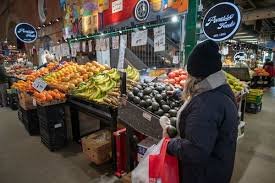
Gas Prices in Toronto and the Rising Cost of Food
Canadians are bracing for potentially higher grocery bills as oil prices continue to climb, fueled by ongoing conflict in the Middle East. While broader inflation has been easing, the impact of increased fuel costs is poised to hit consumers directly at the supermarket, particularly for certain essential food items.
The Link Between Oil Prices and Food Costs
Crude oil prices have surged above US$100 per barrel this month, marking a significant increase of up to 50% since the beginning of the year, largely due to the escalating tensions surrounding the U.S.-Israel conflict and its implications for Iran. This spike in energy costs doesn’t immediately translate to across-the-board price hikes, but it does ripple through the entire food supply chain.
From powering farm machinery and drying crops to processing and, crucially, transporting food, energy is a fundamental component of getting groceries to your table. However, the most immediate impact is felt in transportation costs.
Which Groceries Will Be Affected?
Heavier, perishable foods that travel long distances are the first to reflect increases in gasoline prices. Experts predict that Canadians can expect to see modest price increases on items like lettuce, spinach, citrus fruits, and pulses.
“If transportation costs went up 5 per cent, that would be a 0.5-per-cent increase at the grocery store,” explains Michael von Massow, an economist and professor at the University of Guelph. Currently, fueling a food delivery semi-truck costs approximately 26% more than it did at the end of February, rising from $711 to $895 (according to En-Pro International Inc.).
For some fresh produce, delivery costs can account for as much as 9 to 10% of the retail price. For example, lettuce from California or Mexico requires both long-distance transport and refrigeration, significantly increasing fuel consumption.
In contrast, staples like bread have a lower transportation cost component – around 3.5% of the retail price.
Beyond Transportation: Other Factors at Play
Widely traded commodities like wheat, rice, corn, and soy are also vulnerable to rising energy costs due to their reliance on transportation and chemical inputs. Jennifer Clapp, a professor in Global Food Security and Sustainability at the University of Waterloo, notes that India, the world’s largest rice exporter, is already slowing down shipments due to increased shipping costs.
Fertilizer prices are another potential concern, as the Strait of Hormuz is a critical route for global sulphur and urea exports. However, Richard Barichello, a professor at the University of British Columbia, emphasizes that fertilizer costs are just one of many factors influencing crop prices, including weather, disease, and trade restrictions.
A Double Whammy for Canadian Consumers
Canada has already experienced higher-than-average grocery price increases over the past year. Food prices jumped about 10% between 2015 and 2020, compared to 22% in the following four years. The current oil price hikes represent a “double whammy,” according to Frances Donald, chief economist at Royal Bank of Canada.
“Everyone has to eat,” she says. “When you see gasoline and food prices go up, people will look at other areas to cut.”
A Glimmer of Hope?
While fuel costs are expected to impact grocery bills in the coming months, warmer weather and increased domestic produce supply could help mitigate some of the increases. Additionally, stabilizing meat prices, as cattle herds recover from recent droughts, offer a small degree of relief.
“I think in the next couple of months, we’ll feel the effect of fuel costs, but some of that will be moderated,” says Prof. von Massow. “These will be smaller percentages and they’ll only last as long as the fuel price is high.”
Further Reading: For more information on managing your finances, consider exploring resources on investment basics and financial literacy.