Dow Futures & Global Market Response to Middle East Conflict
Financial markets are closely monitoring the unfolding situation in the Middle East, with significant impacts observed across various asset classes. From surging oil prices to fluctuations in stock markets and a flight to safe-haven assets, investors are bracing for volatility. Here’s a detailed look at how the markets are reacting to the developing turmoil.
Oil Prices Surge
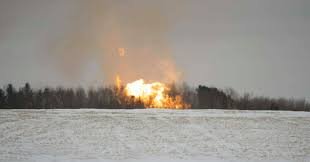
Global oil prices experienced a substantial increase on Monday, reaching levels not seen in over eight months. Brent crude, the international benchmark, jumped 6.7% to $77.74 per barrel – its highest since June. West Texas Intermediate (WTI) crude, the US benchmark, gained 6.3% to $71.23 per barrel, also marking a peak since June. Initial spikes of up to 13% on Sunday evening were partially retraced as investors hope for limited long-term disruptions. You can find more information on oil market dynamics at the U.S. Energy Information Administration.
Stock Market Performance
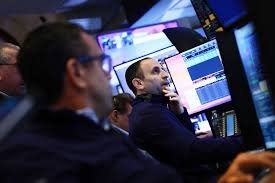
Stock markets exhibited a mixed performance. The Dow closed down slightly by 73 points, or 0.15%, after a steeper earlier decline. However, the S&P 500 and Nasdaq managed to turn positive, rising 0.04% and 0.36%, respectively. European markets fell, with the Stoxx 600 down 1.61%, and Japan’s Nikkei 225 dropped 1.35%. Wall Street generally anticipates a relatively short, though turbulent, conflict, historically followed by a market rebound.
Safe-Haven Assets Gain Traction
Escalating tensions spurred a demand for safe-haven assets. Gold prices rose 2%, reaching a one-month high before partially retracing gains. The US dollar also strengthened against other major currencies, gaining 0.95% and erasing its year-to-date losses, trading at a five-week high. This reflects investor preference for stability during uncertain times.
Impact on Other Assets
- Diesel & Natural Gas: Diesel prices surged, hitting over two-year highs, with European gasoil futures up roughly 18% and US diesel futures jumping 12%. Natural gas futures in Europe soared 38%, the largest single-day gain since 2022, following a halt in LNG production by QatarEnergy.
- US Government Bonds: Initially gaining on Sunday, US government bonds reversed course on Monday as investors reassessed the potential inflationary impact of higher oil prices.
- Bitcoin: Bitcoin experienced a more than 5% gain, trading around $69,120, after an initial dip.
Sector-Specific Movements
While broader markets were mixed, certain sectors experienced significant movements. Defense stocks – Northrop Grumman, RTX Corporation, and Lockheed Martin – saw gains of 6%, 4.7%, and 3.37%, respectively. Conversely, airline stocks – American Airlines, Delta Air Lines, and United Airlines – declined as investors factored in the uncertainty surrounding travel in the Middle East. For more insights into airline industry trends, visit IATA (International Air Transport Association).
Expert Outlook
“Our take is markets overall are holding up OK, all things considered,” noted Krishna Guha, vice chairman at Evercore ISI. He suggests that if oil remains around $80 per barrel and the conflict is short-lived, the global economic impact will be limited. However, a sustained rise above $100 would have “qualitatively different,” and more significant, consequences.