Decoding the VIX: Is Now a Buying Opportunity?
Recent analysis of the VIX (Volatility Index) suggests a potentially lucrative strategy for investors: viewing market dips as buying opportunities. A report from DS Investment & Securities, analyzing VIX data dating back to 1990, indicates that further market declines could be met with strategic purchasing.
Understanding the Current VIX Level
Currently, the VIX stands at 26.0. While this represents an increase in volatility, analysts at DS Investment & Securities point out that it hasn’t reached levels seen during periods of extreme market stress, such as the global financial crisis. Historically, the median peak during significant volatility spikes has been around 29.1, with over half of all spikes peaking below 30.
The report highlights that a VIX level of 26.0 is still in the early stages of a spike detection threshold, relatively close to the historical median high. If the index surpasses 28, the probability of reaching 30 increases to 77.3 percent.
Potential Buying Levels
The analysis outlines potential buying sections based on different market scenarios, using both the KOSPI and the S&P 500 as benchmarks:
- KOSPI:
- First Buying Section: 5070 (-9.2%)
- Second Buying Section: 4816 (-13.8%)
- Worst-Case Scenario: 4316 (-22.7%)
- S&P 500:
- First Buying Section: 6382 (-5.3%)
- Second Buying Section: 5975 (-11.3%)
- Worst-Case Scenario: 5776 (-14.3%)
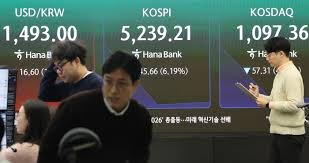
Analysts note that the market already experienced a decline of -12.65% (reaching 5059) on March 4th, which aligns with the first buying section. Further weight expansion is suggested when the market reaches 4816.
The ‘Fear is a Buying Opportunity’ Mentality
The core message from DS Investment & Securities is clear: market fear should be interpreted as a potential buying signal. By analyzing historical VIX data and identifying key support levels, investors can strategically position themselves to capitalize on market recoveries. Understanding the VIX and its historical patterns can be a valuable tool for navigating volatile market conditions. For further insights into volatility and market analysis, consider exploring resources from the CBOE (Chicago Board Options Exchange), the creators of the VIX.
Disclaimer: This article is for informational purposes only and should not be considered financial advice. Always conduct your own research and consult with a qualified financial advisor before making any investment decisions.