Cook County Property Taxes: A Growing Burden
A recent report from the Cook County Treasurer’s office reveals a concerning trend: property taxes have significantly outpaced inflation and wage growth over the past three decades. Between 1995 and 2024, property taxes in Cook County have surged nearly 182%, a dramatic increase that is impacting residents across the county.
The Numbers Tell the Story
The county’s property tax levy has risen from $6.8 billion in 1995 to $19.2 billion in 2024 – more than double the rate of inflation. Had taxes kept pace with inflation, the current levy would be closer to $10.1 billion. This substantial increase is placing a significant financial strain on homeowners and renters alike.
Loopholes and Limitations
Cook County Treasurer Maria Pappas points to loopholes within the state’s Property Tax Extension Limitation Law (PTELL) as a key contributor to the problem. While PTELL was designed to limit tax increases to the rate of inflation or 5%, many local officials have exploited these loopholes to enact increases exceeding these limits. Furthermore, 94 of the county’s 135 municipalities are not bound by PTELL, exacerbating the issue.
“Locally, we have to cut down how much we’re spending,” Pappas stated in an interview with WBEZ. Addressing the root causes of spending increases is crucial to alleviating the property tax burden.
Disproportionate Impact on South and West Side Neighborhoods
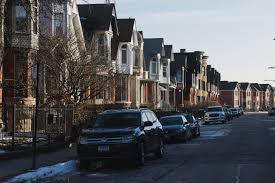
The impact of rising property taxes isn’t felt equally across Cook County. Predominantly Black neighborhoods on the South and West sides have been disproportionately affected. For example, the Oakland neighborhood, located just north of Kenwood, experienced a staggering 636.22% increase in property tax bills between 1995 and 2024. East Garfield Park saw a 447.22% increase during the same period. Other neighborhoods, including the Lower West Side, West Garfield Park, and North Lawndale, all experienced increases exceeding 200%.
In contrast, suburban areas saw comparatively smaller increases. Unincorporated Riverside experienced a 235% increase, while Phoenix, Illinois, saw a 192.73% rise.
Beyond PTELL: Schools and TIF Districts
The report identifies schools and Tax Increment Financing (TIF) districts as additional factors driving up property taxes. Countywide, school tax demands have skyrocketed 189%, representing $6.9 billion. Chicago Public Schools (CPS) and other city governments have seen taxes rise from $2.9 billion in 1995 to nearly $8.9 billion in 2024, largely due to public pension funding mandates. Suburban municipalities have added approximately $6.3 billion to school funding.
CPS faces significant pension costs, totaling around $662 million annually. The city is responsible for 65% of its pension costs, while suburban school districts only pay 2%, with the state covering the remainder. Illinois currently funds less than a quarter of its schools, the lowest percentage of any state.
“The schools have to make it up with property taxes,” explains Hal Dardick, director of research for the treasurer’s office. “It may require some sort of alternate method by the state of funding schools.”
The State’s Response and Potential Solutions
State lawmakers set a goal in 2017 to fund 90% of each school’s state funding needs by 2027, but are currently $5 billion short. At the current rate, achieving this goal is projected to take until at least 2037. Recent legislative proposals, introduced by State Sen. Graciela Guzmán and State Rep. Will Davis, aim to address this funding gap, with suggestions including a millionaire’s tax.
Tax increases within TIF districts, which are also exempt from PTELL, have exploded, increasing by eleven times, demanding $1.3 billion more in the city and $372 million in the suburbs. They now account for about 10% of the county’s property tax burden, up from 2.5% in 1995.
“Legislators need to really take a hard look at the entire tax system in the state of Illinois,” Dardick concludes. “In its fairness and how it harms businesses and residents.”
Source: Cook County Treasurer’s Office