Alan Greenspan: The Maestro of Monetary Policy and His Lasting Impact
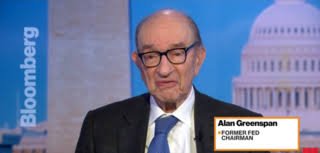
Alan Greenspan. The name evokes images of economic stability, astute decision-making, and a period of unprecedented prosperity in the United States. Serving as Chairman of the Federal Reserve from 1987 to 2006, Greenspan navigated a complex landscape of economic booms, recessions, and global crises, earning him the moniker “The Maestro” for his perceived ability to orchestrate monetary policy with precision.
Early Life and Career
Born on March 6, 1926, in New York City, Alan Greenspan’s journey to economic prominence began with a strong academic foundation. He earned a Bachelor of Science degree in Economics from New York University, followed by a Master of Arts and a Doctor of Philosophy degree in Economics from Massachusetts Institute of Technology (MIT). Before assuming the helm of the Federal Reserve, Greenspan built a successful career as an economic consultant, co-founding the economic consulting firm Townsend-Greenspan & Co. in 1954. His firm provided economic analysis to a wide range of clients, giving him invaluable insights into the workings of the American economy.
The Greenspan Years at the Federal Reserve
Appointed by President Ronald Reagan in 1987, Greenspan inherited a market reeling from the Black Monday stock market crash. His initial response – a combination of liquidity injections and reassuring communication – helped to stabilize the financial system. Throughout his tenure, Greenspan championed a philosophy of preemptive monetary policy, adjusting interest rates to counter potential inflationary pressures or economic slowdowns. This approach, while often praised for its effectiveness, also drew criticism for its perceived opacity and potential to create asset bubbles.
Navigating Economic Challenges
Greenspan’s leadership was tested by several significant economic events:
- The Savings and Loan Crisis (late 1980s – early 1990s): Greenspan oversaw the Federal Reserve’s response to the crisis, working to contain the damage and prevent systemic risk.
- The Asian Financial Crisis (1997-1998): The Fed, under Greenspan, played a role in providing liquidity to international markets to mitigate the crisis’s impact.
- The Dot-com Bubble (late 1990s): Greenspan’s low-interest rate policy during this period is often cited as a contributing factor to the rapid rise and subsequent burst of the dot-com bubble.
- The September 11th Attacks (2001): The Fed aggressively lowered interest rates in the aftermath of 9/11 to stimulate the economy.
Controversies and Criticisms
Despite his widespread acclaim, Greenspan’s legacy is not without controversy. Critics argue that his policies contributed to the housing bubble of the mid-2000s, ultimately leading to the 2008 financial crisis. His advocacy for deregulation, particularly in the financial sector, has also been questioned. In his memoir, The Age of Turbulence, Greenspan acknowledged a “flaw” in his ideology, admitting that he had underestimated the role of irrational exuberance in driving asset prices. You can learn more about his views in this Amazon link.
Legacy and Influence
Alan Greenspan’s influence on monetary policy and economic thought remains profound. His emphasis on data-driven decision-making, proactive risk management, and the importance of central bank independence continue to shape the actions of central banks around the world. While his policies are still debated, there’s no denying that Alan Greenspan was a pivotal figure in the economic history of the late 20th and early 21st centuries. His tenure at the Federal Reserve marked a period of significant economic transformation, and his legacy continues to be felt today. For further reading on the Federal Reserve, visit their official website: Federal Reserve.