South China Sea Dispute: Philippines Accuses China of Cyanide Fishing
The Philippines has formally accused Chinese fishermen of deliberately poisoning waters surrounding the contested Spratly Islands in the South China Sea with cyanide. Manila alleges this act of “sabotage” is intended to decimate local fish populations and deprive Filipino troops stationed at Second Thomas Shoal of a vital food source. China has vehemently dismissed the claims as a “farce.”
This accusation marks the latest escalation in a long-standing and increasingly fraught dispute over the South China Sea, characterized by years of tense stand-offs and occasional violent confrontations between Philippine and Chinese vessels. The region is a critical geopolitical hotspot, with overlapping territorial claims from China, the Philippines, Vietnam, Taiwan, Malaysia, and Brunei.
Cyanide Fishing: A Destructive Practice
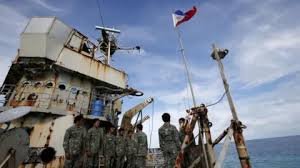
According to the Philippine National Security Council (NSC), the alleged poisoning began last year near Second Thomas Shoal, a part of the Spratly archipelago. This reef is home to the BRP Sierra Madre, a deliberately grounded World War II-era ship that serves as a Philippine military outpost, asserting Manila’s claim to the territory. The NSC claims the use of cyanide aims to eliminate the local fish supply, impacting the Navy personnel stationed there.
NSC assistant director-general Cornelio Valencia highlighted the dangers, stating the cyanide poses health risks to troops through contaminated water and fish, and threatens the coral reefs that provide structural support to the BRP Sierra Madre. Manila has reportedly raised the issue with Beijing, but has yet to receive a formal response. A report is being prepared for the foreign ministry, potentially leading to a diplomatic protest.
The Philippine Navy has reportedly seized 10 bottles of cyanide from vessels allegedly originating from Chinese fishing operations in February, July, and October of last year. Recent sightings of Chinese crews actively poisoning waters near the shoal have also been reported, with samples testing positive for cyanide.
Cyanide fishing, a historically used but highly destructive practice in Southeast Asia, stuns or kills fish for the live reef trade. It is illegal under Philippine law and widely banned due to its devastating impact on marine ecosystems. World Wildlife Fund details the extensive damage caused by this practice.
The Broader South China Sea Dispute
The South China Sea is a vital shipping route and a rich fishing ground, supporting the livelihoods of millions. It’s estimated that over half of the world’s fishing vessels operate in this area. The Paracel and Spratly Islands are also believed to contain significant natural resources and potential energy reserves.
China asserts nearly complete control over the South China Sea, a claim rejected by a 2016 international tribunal ruling. The Philippines bases its claim on geographical proximity to the Spratly Islands. Both nations also dispute ownership of Scarborough Shoal, a strategically important area.
Escalating Tensions and International Involvement
Tensions between Manila and Beijing have significantly increased in recent years. A violent clash in June 2024 saw Chinese coast guard personnel boarding Philippine navy boats near Second Thomas Shoal, injuring several sailors. China has repeatedly attempted to obstruct Philippine resupply missions to the BRP Sierra Madre.
The Philippines has been strengthening its alliances, conducting joint maritime exercises with the United States and Australia, with Japan joining as a full participant this year. These drills have drawn criticism from Beijing, who claims they exacerbate regional tensions. A recent military agreement with France will see French troops participating in the Balikatan exercises.
Source: BBC News – Copyright 2026. All rights reserved.