Escalating Tensions in Southern Lebanon
Lebanon’s Prime Minister, Nawaf Salam, has issued a stern warning regarding Israeli actions and rhetoric, asserting they pose a significant threat to Lebanese sovereignty and violate international law. This comes as the Israeli military continues to bolster its presence in southern Lebanon, despite growing international concerns over its intensified bombardment and deepening incursions into Lebanese territory.
Expanding ‘Buffer Zone’ and Troop Deployments
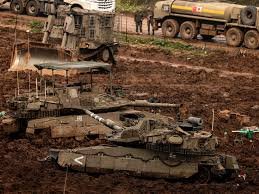
The Israeli military announced on Thursday the deployment of troops from Division 162 to southern Lebanon, aiming to expand a so-called “buffer zone” in the region. This division joins two other army divisions already operating in the area. The move follows Prime Minister Benjamin Netanyahu’s declaration of plans to create a “larger buffer zone” to counter missile threats from Hezbollah, the Lebanese armed group.
Context of the Conflict
Israel launched intensified attacks on Lebanon in early March following Hezbollah’s rocket fire towards Israeli territory, which was a response to the February 28 assassination of Iranian Supreme Leader Ayatollah Ali Khamenei in the US-Israel war on Iran. These attacks have encompassed both aerial and ground operations across Lebanon, accompanied by mass forced displacement orders targeting residents of southern Lebanon and several Beirut suburbs.
Humanitarian Crisis Deepens
The United Nations reports that over 1.2 million people have been displaced from their homes since the beginning of March, raising serious concerns about a mounting humanitarian crisis. According to Lebanon’s Ministry of Health, Israeli attacks have resulted in at least 1,116 fatalities and 3,229 injuries. You can find more information about the humanitarian situation from organizations like UNHCR.
International Response and Warnings
Several foreign nations, including France, the United Kingdom, Germany, Italy, and Canada, have urged de-escalation, warning that an expanded Israeli ground offensive would have “devastating humanitarian consequences” and “must be averted.” However, Israeli troops have continued to advance into Lebanese territory. Defence Minister Israel Katz stated that Lebanese citizens will not be permitted to return to their homes in the south until the safety of northern Israel is guaranteed.
Lebanon’s Appeal to the UN
During a phone conversation with UN Secretary-General Antonio Guterres on Thursday, Prime Minister Salam emphasized that Israel’s actions and statements “constitute a matter of utmost gravity that threatens Lebanon’s sovereignty” and violate international law and the UN Charter. He also announced his government’s intention to submit a complaint to the UN Security Council, urging the body to “fulfill its responsibilities in putting an end to these violations.”
Allegations of Atrocity Crimes
Amnesty International has condemned the destruction of bridges and homes in southern Lebanon, linking it to Israel’s “record of atrocity crimes” observed in the Gaza Strip. The organization called on world leaders to uphold their international legal obligations and halt Israel’s unlawful destruction of civilian property. Read more about Amnesty International’s findings here.
Hezbollah’s Stance and Recent Operations
Hezbollah chief Naim Qassem affirmed the group’s commitment to continue fighting “without limits” against what he described as an “enemy that occupies land and continues daily aggression.” On Thursday, Hezbollah announced over 45 military operations against Israel, including rocket and drone attacks, and the targeting of Israeli troops within Lebanon. They also reported targeting Israeli armored vehicles, including Merkava tanks, with guided missiles.
Recent Casualties
A Hezbollah rocket attack on the Israeli coastal city of Nahariya resulted in one fatality and 11 injuries, according to Israeli authorities. Separately, the Israeli military reported one soldier killed and four injured in an “incident” in southern Lebanon.
Follow Al Jazeera English for continued coverage.