Cuba News: A Nation Navigating Crisis and Dialogue
Cuba is currently facing a multifaceted crisis, marked by severe fuel shortages, ongoing discussions with the United States, and a surprising move towards prisoner releases. This article provides a comprehensive overview of the latest Cuba news, examining the political and economic pressures impacting the island nation.
Fuel Crisis and US-Cuba Talks
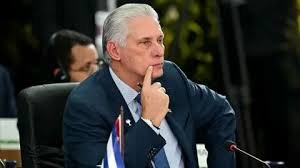
Cuban President Miguel Díaz-Canel recently revealed that his government is engaged in preliminary talks with the Trump administration, seeking resolutions to the long-standing differences between the two countries. This dialogue comes as Cuba grapples with a crippling fuel blockade imposed by the US, with Díaz-Canel stating that no fuel shipments have reached the island in three months. The situation has led to widespread blackouts and significant disruption to daily life.
US President Donald Trump has publicly commented on Cuba’s struggles, even hinting at a “friendly takeover.” He has also threatened tariffs on countries continuing to supply Cuba with oil, further exacerbating the crisis. The White House confirmed ongoing communication, stating that a deal “would be very easily made” if Cuban leaders were willing to negotiate.
Cuba’s reliance on imported fuel for its electricity generation makes it particularly vulnerable to these pressures. Historically, Venezuela supplied approximately 35,000 barrels of oil daily, meeting around half of Cuba’s needs. However, recent political developments in Venezuela, including the situation surrounding President Nicolás Maduro, have disrupted this crucial supply line. This disruption is a key element in understanding the current Cuba news surrounding energy security.
Mitigation Efforts and Domestic Production
In response to the fuel shortage, Cuba is actively working to increase domestic crude and gas production, as well as expanding its solar energy capacity. However, these efforts are proving insufficient to fully offset the impact of the fuel blockade, leading to an increasingly “unstable” electrical grid, according to President Díaz-Canel.
Prisoner Release as a Gesture of Goodwill
In a surprising development, Cuba announced it will release 51 prisoners in the coming days as a demonstration of “goodwill” following talks with the Vatican. This move follows a meeting between Cuban Foreign Minister Bruno Rodriguez and Pope Leo at the Vatican. While the government has not specified whether the released prisoners include political detainees, it confirmed they have all served a significant portion of their sentences and maintained good conduct. Since 2010, Cuba has pardoned nearly 10,000 prisoners, with an additional 10,000 released through other forms of relief over the past three years. The government emphasizes this decision is “sovereign” and aligns with the upcoming Holy Week.
Historical Context and US-Cuba Relations
The current challenges are rooted in decades of strained relations between the US and Cuba, dating back to the 1959 revolution led by Fidel Castro. US sanctions and trade embargoes have been in place since the early 1960s, significantly impacting Cuba’s economic development. The island’s proximity to the US – just 90 miles south of Florida – has also contributed to a significant Cuban-American population in the US, particularly in Miami.
The Role of Key Figures
US Secretary of State Marco Rubio, the son of Cuban immigrants, is reportedly involved in the ongoing talks. Rubio has consistently advocated for change in Cuba, stating that it is the “only chance” for improving the quality of life for its citizens. These statements highlight the complex political dynamics influencing the current Cuba news cycle.
For more information on US-Cuba relations, you can visit the U.S. Department of State website.
Copyright 2026 BBC. All rights reserved.