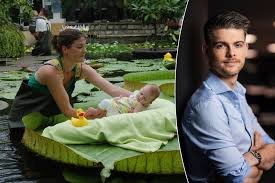
A Magical Experience: Where Nature Meets Fantasy
Imagine a world where a tiny baby floats atop a massive, emerald-green leaf, looking like a character from a fairy tale. This isn’t a scene from a movie, but a real-life phenomenon at Plantentuin Meise. The event has become so legendary that it is now affectionately known as the “Tomorrowland for babies”—not because of the electronic beats, but because of its sheer magic, exclusivity, and surreal atmosphere.
The demand is staggering. This year, approximately 500 available slots for the annual photoshoot were snapped up in less than an hour, proving that parents are eager to capture a moment of pure, natural wonder.
The Science Behind the Magic: How Can a Leaf Hold a Baby?
You might wonder if this is a clever marketing trick or a feat of engineering. According to science experts, it is pure biological power. The star of the show is the Victoria amazonica, a giant water lily native to the Amazon Basin.
These spectacular plants are built for strength. Here is why they can support a child:
- n
- Giant Dimensions: In their natural habitat, leaves can grow up to three meters in diameter.
- Structural Engineering: The underside of the leaf features a complex network of sturdy ribs and air chambers.
- Natural Buoyancy: This unique structure provides incredible lift, allowing the leaf to support several dozen kilograms, provided the weight is evenly distributed.
An Exclusive Event with a Delicate Balance
Despite the popularity, the “Tomorrowland for babies” remains a brief event. This limitation isn’t due to a lack of interest, but a commitment to conservation. The giant water lilies are delicate; the constant activity of a photoshoot can exhaust a leaf. To ensure the plants remain healthy for other visitors throughout the summer, the event is strictly limited to a few days.
The Process: To ensure total safety, a professional gardener—acting as a guardian of the lilies—carefully places the baby on a protective cushion. Additionally, a hidden support system (including a foam disc) is placed beneath the leaf to prevent any accidental punctures, ensuring the experience is safe for both the baby and the plant.
Beyond the Photos: The Lifecycle of a Giant
The beauty of the Victoria amazonica extends beyond its leaves. Its flowers are equally breathtaking, growing up to 40 centimeters wide. They follow a fascinating biological cycle to attract pollinators:
- The First Night: The flower opens in a pure white hue, releasing a strong, sweet fragrance to attract beetles.
- The Second Night: The flower transforms into a deep pink or reddish-purple color and loses its scent, releasing the trapped beetles to carry pollen to another flower.
At Plantentuin Meise, these lilies are grown as annuals. Gardeners manually pollinate the flowers and harvest seeds in the winter to start the cycle anew, ensuring that every June, these natural giants return to amaze the world.
Nature’s Ingenuity
Whether you managed to snag a ticket for the photoshoot or simply visit the gardens to admire the view, the giant water lily serves as a powerful reminder of nature’s ingenuity. It is a perfect blend of strength and elegance, turning a simple botanical garden into a surreal paradise for families.