Quentin Tarantino: A Deep Dive into the Mind of a Modern Master
Ben Morganti, a film and television critic at CBR, aptly describes Quentin Tarantino as a filmmaker with a unique eye and a deep understanding of cinematic craft. Having worked as a producer on independent films, Tarantino blends practical industry knowledge with a genuine passion for storytelling. It’s easy to appreciate the impact Quentin Tarantino has had on cinema, whether through his directed works or his celebrated screenplays. However, while many of his early scripts translated brilliantly to the screen, nothing quite matches the power of his fully realized directorial visions.
The Allure and the Debate
Tarantino’s films evoke strong reactions – love, hate, or something in between. This isn’t surprising, given the distinctly specific nature of his work. He’s the cinephile’s director, a movie nerd who became a movie-maker. Even his most ardent fans can acknowledge that not every film reaches his peak. For many, 2007’s Death Proof stands out as his most flawed effort.
Death Proof: A Loving Homage or a Misstep?
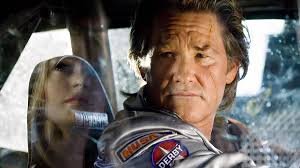
Death Proof was born from the Grindhouse experiment, a collaboration with Robert Rodriguez. It wasn’t intended to be a grand statement, but rather a fun homage to a specific era of filmmaking. The film deliberately captures the feel of 1970s grindhouse movies – low-budget, genre-bending, and often exploiting social issues. In this regard, Death Proof succeeds admirably. It’s a complete embodiment of the style, making it an entertaining watch from start to finish.
While not considered one of Tarantino’s essential works, Death Proof is unique in his filmography. It’s his only foray into the car action and slasher genres, and arguably better than many films in those categories. However, it’s also where some of his directorial choices feel less refined.
Stylistic Choices and Thematic Resonance
Tarantino’s stylistic flourishes are on full display in Death Proof. The use of black and white sequences, for example, isn’t merely aesthetic. It serves to highlight the arrival and predatory nature of Stuntman Mike, echoing the suspenseful style of Alfred Hitchcock. The shift in visual style also underscores the contrast between the first and second groups of women in the film.
The first sequence is shot with a grainy, 1970s aesthetic, reminiscent of low-budget film stock. The transition to color, and the removal of the grain, signifies a shift to the “final girls” – a more modern and empowered group of female characters. This visual change comments on the evolution of female representation in cinema.
Dialogue, Pacing, and the Celebration of Cinema
Death Proof is notably dialogue-driven, even for a Tarantino film. While his dialogue is usually a strength, here it sometimes feels drawn out, slowing the pace of the film. Ultimately, Death Proof feels less like a transcendent narrative and more like an expression of cinema itself. It’s structurally conventional and unevenly paced, but the climactic final sequence is undeniably thrilling.
A Cinephile’s Film
Death Proof is a film for cinephiles. It’s a messy, referential, and ultimately introspective work that speaks volumes about Tarantino’s love for cinema. He consistently honors the medium by reflecting its greatest elements while simultaneously forging his own unique style. With Death Proof, this practice is particularly deliberate, serving as an experiment that honors a specific type of filmmaking and era.
Tarantino’s passion shines through in every aspect of the film, from the casting of Rose McGowan (who previously starred in Scream, a film Tarantino openly critiqued) to the carefully chosen musical cues. He pays homage to classic car action films like Dirty Mary Crazy Larry and Vanishing Point, slasher movies like Drive-In Massacre and Death Race 2000, and exploitation films of all kinds. Even the inclusion of the “Wilhelm Scream” is a nod to cinematic tradition.
Exploring Gender Dynamics
Beyond the stylistic homages, Death Proof explores complex themes, particularly the evolving representation of women in cinema. The film contrasts the archetypal roles of women in 1970s grindhouse movies with the more empowered characters of the present day. The power dynamics between men and women are central to the narrative, leading to tragedy for the first group of women and ultimately, Stuntman Mike’s downfall at the hands of the second.
A Flawed Masterpiece?
Despite its flaws, Death Proof remains a fascinating and worthwhile film. It’s a personal endeavor for Tarantino, a commentary on cinema itself, and a loving tribute to a genre he holds dear. It’s a modern iteration of B-movies, offering a unique learning experience for those interested in the art of filmmaking. While it may not be his most celebrated work, it’s a testament to Tarantino’s passion and creativity.
Recently, Tarantino praised a groundbreaking comic book adaptation, further demonstrating his discerning taste and appreciation for compelling storytelling. As fans await his tenth film, a potential sequel to Once Upon a Time in Hollywood, it’s clear that Quentin Tarantino continues to push boundaries and challenge expectations.