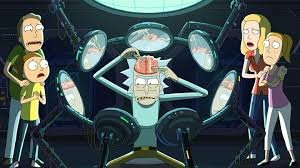
The Mind Behind the Chaos: Dan Harmon and the Art of Storytelling
If you’ve ever wondered why Rick and Morty feels like a fever dream that somehow always makes emotional sense, the answer lies in the mind of its co-creator, Dan Harmon. Known not only for his brilliance in animation but also for his work on Community, Harmon has fundamentally shifted how we perceive character development and narrative structure in the modern era.
At the heart of his success is the Dan Harmon Story Circle, a streamlined framework for storytelling that works across everything from 20-minute episodic comedies to sprawling feature films. But as it turns out, Harmon’s relationship with the “rules” of writing is just as complex as the multiverses he creates.
Canon vs. Creativity: The “Gravity” of Narrative
In a recent conversation at an Adult Swim event, Harmon touched upon a topic that often divides fandoms: canon. For the uninitiated, canon refers to the official, authoritative body of work and rules within a fictional universe (for example, the fact that Darth Vader is Luke Skywalker’s father in Star Wars).
While audiences often crave strict adherence to canon, Harmon views it through a much more volatile lens. He describes his relationship with canon as being similar to an aeronautical engineer’s relationship with gravity:
“It’s like, the whole point of what you’re doing, it only works with it there, but it’s the thing you are fighting against. The whole point is to defy it.”
For a show like Rick and Morty, which juggles time travel, alternate dimensions, and existential nihilism, strict canon can be a creative shackle. Harmon admits that he fears the “commitment” of canon because the more the audience invests in the characters, the higher the stakes—and the greater the risk of making a narrative mistake.
The Story Circle: A Compass, Not a Map
If Harmon struggles with canon, does he strictly follow his own famous Story Circle? Not exactly. Harmon believes that story models should function as compasses rather than rigid maps.
His philosophy is simple: Master the rules so you know how to break them. He uses a vivid analogy to explain this:
- The Natural: Some writers can “barf out” a satisfying story without any help—these are the Michael Jordans of writing.
- The Architect: For those who feel lost in the narrative woods, techniques like the Story Circle act as a stick in the sand, pointing North so the writer can find their way back to the plot.
By treating structure as a safety net rather than a cage, Harmon is able to maintain the unpredictable, “anything-goes” style of comedy that has made Rick and Morty a global phenomenon.
Why It Works: The Magic of Unpredictability
The enduring appeal of the series lies in its ability to break expectations. By fighting against the “gravity” of traditional serialization, Harmon creates a space where the characters can evolve in unexpected ways while the plot remains tethered to core emotional truths.
Whether he’s discussing high-level narrative theory or making self-deprecating jokes about his own life, Dan Harmon proves that the secret to great storytelling isn’t just about following a circle—it’s about knowing exactly when to step outside of it.
For those interested in diving deeper into narrative structures, exploring the mechanics of the Story Circle can provide great insights into how to structure your own creative projects.