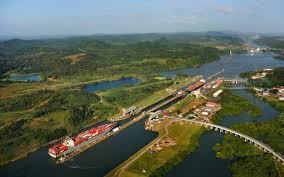
The Panama Canal: An Engineering Marvel Shaping Global Trade
For over a century, the Panama Canal has stood as one of the most ambitious and significant engineering feats in human history. By carving a path through the Isthmus of Panama, this artificial waterway connects the Atlantic and Pacific Oceans, fundamentally altering the way the world conducts maritime trade.
What Exactly is the Panama Canal?
At its core, the Panama Canal is a 50-mile (80 km) shortcut that allows ships to avoid the treacherous and lengthy journey around the southern tip of South America (Cape Horn). This reduction in travel distance not only saves time but significantly lowers fuel costs and carbon emissions for global shipping fleets.
How Does the Panama Canal Work?
One of the most fascinating aspects of the canal is its lock system. Because the terrain is uneven and the canal crosses the Continental Divide, ships cannot simply sail at sea level. Instead, they use a series of locks that act as “water elevators.”
- n
- Lifting Ships: Water is used to raise ships to the level of Gatun Lake, which is 85 feet above sea level.
- Crossing the Isthmus: Vessels sail across the lake and through the Culebra Cut.
- Lowering Ships: A second set of locks lowers the vessels back down to sea level on the opposite ocean.
For a deeper dive into the mechanics of the waterway, you can explore the official Panama Canal Authority website.
A Brief History: From Vision to Reality
The dream of a canal across Panama dates back centuries, but the first serious attempt was made by the French in the late 19th century. Unfortunately, disease and engineering challenges led to their failure. The United States took over the project in 1904, completing the monumental task in 1914.
Over the decades, the canal has evolved. In 2016, the Panama Canal Expansion project was completed, introducing larger locks to accommodate “NeoPanamax” ships, which are significantly larger than the original vessels the canal was designed for.
The Economic and Geopolitical Impact
The Panama Canal is a cornerstone of global logistics. It facilitates trade between Asia and the US East Coast, as well as between Europe and the West Coast of the Americas. By optimizing supply chains, it ensures that goods move faster and more efficiently across the globe.
Modern Challenges: Climate Change and Water Scarcity
Despite its success, the canal faces a modern crisis: water scarcity. Because the locks rely on freshwater from Gatun Lake, prolonged droughts—often linked to climate change—have forced the canal to limit the number of daily ship crossings and reduce the maximum draft of vessels.
Addressing these environmental hurdles is now a priority to ensure that the Panama Canal remains a viable artery for international commerce in the 21st century.
Conclusion
The Panama Canal is more than just a waterway; it is a symbol of human ingenuity and a vital engine for the global economy. As the world navigates new environmental and economic challenges, the canal continues to adapt, proving that it remains an indispensable link in the chain of global trade.