Hidden Giant: Massive Meteorite Crater Discovered in Northern Canada
From Google Maps to a Geological Breakthrough
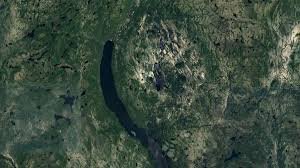
Who knew that planning a camping trip could lead to one of the most significant planetary discoveries of recent years? For amateur astronomer Joël Lapointe, a simple browse through Google Maps while prepping for a 2024 vacation transformed into a scientific goldmine. While scanning the terrain of Quebec’s Côte-Nord region near Lake Marsal, Lapointe spotted an unusual geological formation that screamed one thing: a meteorite crater.
Intrigued, Lapointe reported his findings to Western University via Impact Earth, a crowdsourcing platform dedicated to identifying impact sites. This tip sparked a professional expedition led by planetary geologist Gordon “Oz” Osinski, who visited the site in 2025 to uncover the truth buried in the Canadian north.
Unveiling Uhackatik: A 390-Million-Year-Old Secret
The results were staggering. Provisionally confirmed as one of the largest craters found in recent history, the feature—now named Uhackatik with the approval of the Innu Council of Ekuanitshit—is approximately 15 miles (25 kilometers) wide.
To put its scale into perspective, Osinski noted that the only recent discovery of similar magnitude was the Hiawatha structure in Greenland (2018), though Hiawatha remains shrouded in ice and controversy. Uhackatik, however, offers clear, undeniable evidence of its extraterrestrial origins.
The Smoking Gun: Geological Evidence
What makes Uhackatik so scientifically valuable? The expedition uncovered several “shock metamorphic effects”—physical deformations in the rock caused by the extreme heat and pressure of a cosmic impact. Key findings include:
- Shatter Cones: Distinctive branching features in rock layers produced by high-pressure shockwaves.
- Impact Melt Rocks: Large volumes of rock that melted during the impact and crystallized, mimicking volcanic rock.
- Microscopic Quartz Deformations: Chemical signatures and structural changes that only occur during hyper-velocity impacts.
A Bridge to the Moon and the Artemis Program
Finding a well-preserved meteorite crater on Earth is rare due to erosion and tectonic activity. However, these sites serve as essential “natural laboratories” for scientists studying the Moon and Mars. Osinski suggests that in its prime, Uhackatik likely resembled the Moon’s famous Tycho crater.
The discovery also has direct implications for NASA’s Artemis program. The Uhackatik site shares striking similarities with the Kamestastin crater in Labrador, a site used to train Artemis II astronauts. Because both craters contain minerals like anorthosite—common at the Moon’s south pole—they provide the perfect training ground for future lunar explorers.
What’s Next for Uhackatik?
While the discovery is currently awaiting formal peer review, the findings are set to be presented at the 88th Annual Meeting of the Meteoritical Society in Frankfurt, Germany. Meanwhile, Gordon Osinski will continue his collaboration with NASA, supporting the geology teams for the Artemis 4 and 5 missions, which aim to return humans to the lunar surface as early as 2028.
Stay tuned for more breaking space news as we continue to uncover the cosmic history written in the rocks of our own planet.
📰 You May Also Like