
A Cosmic Scar in the Heart of Canada: The Manicouagan Impact Crater
Deep in the wilderness of Quebec lies one of the most visually stunning and scientifically significant geological landmarks on Earth: the Manicouagan Impact Crater. Often referred to as the “Eye of Quebec” due to its striking annular shape when viewed from space, this site is more than just a beautiful landscape—it is a window into a violent cosmic event that reshaped the region millions of years ago.
What exactly is the Impact Crater in Quebec?
The Manicouagan structure is one of the largest and oldest known impact craters on the planet. Created by a massive asteroid strike approximately 214 million years ago, during the Late Triassic period, the resulting crater was so immense that it fundamentally altered the local crust.
While the original crater was far larger, erosion and subsequent geological shifts have left us with a unique ring-shaped lake. The central island, which remains today, is actually the result of the ground “springing back” up after the initial impact—a phenomenon known as central uplift.
Why the “Eye of Quebec” Matters Today
Beyond its aesthetic appeal, the crater serves as a natural laboratory for scientists worldwide. Understanding the impact crater in Quebec helps researchers in several key areas:
- n
- Planetary Science: By studying the shock metamorphism of the rocks, scientists can better understand impacts on Mars and the Moon.
- Hydropower Engineering: The crater’s unique geography was utilized to create the Manicouagan Reservoir, one of the most ambitious hydroelectric projects in Canada.
- Geological History: It provides critical data on the composition of the Earth’s crust during the Triassic era.
Visiting the Giant: A Journey into the Wild
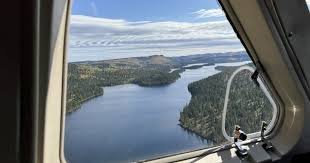
For adventure seekers and geology enthusiasts, visiting the Manicouagan region is a bucket-list experience. While the site is remote, the scale of the ring-shaped reservoir is humbling. To truly appreciate the geometry of the impact, aerial tours are highly recommended, as the “Eye” is most apparent from above.
Fast Facts About the Manicouagan Structure
| Feature | Detail |
|---|---|
| Age | ~214 Million Years |
| Location | Côte-Nord, Quebec, Canada |
| Type | Complex Impact Crater |
Whether you are a fan of astronomy, a lover of nature, or a science buff, the impact crater in Quebec stands as a powerful reminder of our planet’s dynamic history and its connection to the vast, unpredictable universe. For more information on planetary impacts, you can explore the resources provided by NASA.



