The Great Divide: Aleksander Čeferin Takes a Stand Against FIFA
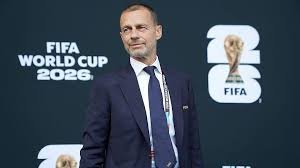
In a move that sent shockwaves through the sporting world, Aleksander Čeferin, the President of UEFA, made a bold statement by absenting himself from the World Cup final between Argentina and Spain. While Čeferin attended the opening match in Mexico City, his decision to snub the final in New Jersey was not a matter of scheduling, but a calculated protest against the current trajectory of FIFA.
The tension between the European governing body and the global authority has reached a breaking point, centering on integrity, political interference, and the commercialization of the beautiful game.
Political Interference and the Balogun Controversy
One of the primary catalysts for Čeferin’s frustration was a perceived breach of sporting integrity. UEFA expressed outrage after US striker Folarin Balogun avoided a critical suspension, allegedly following an intervention by US President Donald Trump.
UEFA described the situation as “unprecedented, incomprehensible, and unjustifiable,” arguing that when the guardians of the game fail to uphold the rules, the credibility of the entire competition is undermined. For Aleksander Čeferin, the game must remain independent of political whims to survive.
Entertainment vs. Tradition: The Half-Time Show Debate
The clash isn’t just about politics; it’s about the very essence of football. FIFA President Gianni Infantino has pushed for a more “spectacle-driven” approach, introducing elaborate half-time shows featuring global superstars like Madonna, BTS, Shakira, and Justin Bieber. These performances extended the traditional 15-minute break to over 27 minutes.
- n
- FIFA’s Vision: Transforming matches into global entertainment events to attract a wider audience.
- Čeferin’s Stance: A firm rejection of “Super Bowl-style” entertainment in the Champions League or the European Championship, prioritizing the sport over the show.
Expansion, Pricing, and Fair Play
The friction extends to the structure of the game itself. Aleksander Čeferin has voiced strong opposition to Infantino’s proposal for a 64-team World Cup, fearing that over-expansion would dilute the quality of the tournament and exhaust players.
Furthermore, the cost of attending these events has become a flashpoint. While World Cup ticket prices in the US soared, UEFA has committed to broadly freezing ticket prices for Euro 2028, ensuring that football remains accessible to the fans rather than just the elite.
The Battle of the Rulebooks: VAR and Discipline
Even the technicalities of the game have become a battlefield. UEFA and FIFA are now diverging on key regulatory issues:
- Mistaken Identity: UEFA has instructed VARs not to consider “diving” under the new mistaken identity protocol, a departure from FIFA’s recent application that saw players like Breel Embolo sent off.
- Player Conduct: While FIFA introduced strict rules against players covering their mouths during confrontations to act as a “deterrent,” UEFA is taking a different approach to red card triggers in these scenarios.
Conclusion: A Game at a Crossroads
The rift between Aleksander Čeferin and Gianni Infantino represents more than just a personality clash; it is a philosophical war. On one side is a vision of football as a global entertainment product; on the other is a commitment to tradition, regulatory certainty, and fan accessibility.
As we look toward future tournaments, the decisions made by these two leaders will determine whether football remains a sport governed by rules or a product governed by markets. For more insights on football governance, you can visit the official UEFA website or follow latest updates on BBC Sport.