
A Hidden Legacy Beneath the Waves
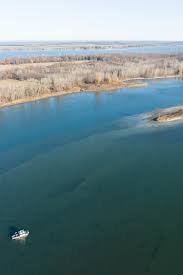
In a stunning intersection of modern infrastructure and ancient history, archaeologists have uncovered a massive stone structure at the bottom of the St. Lawrence River. Located between Contrecœur and Verchères in Montérégie, Quebec, this discovery is not a shipwreck, as initially suspected, but a colossal fish trap estimated to be 1,200 years old.
This site marks a historic milestone: it is the first pre-contact Indigenous underwater archaeological site ever identified in Quebec. The discovery was made during preventive archaeology work related to the expansion of the Port of Montreal terminal in Contrecœur.
From “Shipwreck” to Ancestral Engineering
The discovery began in 2024 when underwater archaeologist Aimie Néron and her team noticed an unusual shape on their sonar imagery. While the oval form initially suggested a sunken vessel, closer inspection revealed a structure composed entirely of stones and aquatic plants.
- n
- Dimensions: The structure measures approximately 38 metres long by 12 metres wide.
- Construction: Built as a mound with tiered stone layers, some stones reaching a metre in width.
- Purpose: An anthropically designed trap meant to capture fish swimming upstream during spawning seasons.
Collaborating with First Nations Knowledge
The identification of the site was made possible through a vital partnership with Indigenous specialists and the W8banaki Nation. Alexandre Tellier, an archaeologist and coordinator for the Ndakinna Bureau of the W8banaki Nation, worked alongside an elder and knowledge keeper who recognized the stone arrangement as a traditional fishing method.
While stone fish traps are still used by the Cree on the Rupert River today, this remains the only example of its kind found in the St. Lawrence region. For the W8banaki, this discovery is more than just an academic find; it is a reconnection with traditional practices and ancestral land use.
Solving the Mystery: How Was it Dated?
Dating the site proved challenging as no artifacts were found directly on the riverbed. However, by analyzing historical water levels and comparing modern sonar images with aerial photographs from the 1930s and 1940s, researchers found a crucial clue: the trap was once on dry land.
The structure was originally located on a small islet known as île aux Bœufs. Due to severe soil erosion—exacerbated by increased maritime traffic—the river eventually engulfed the site. By calculating when the river levels were high enough to cover the island, archaeologists traced the structure back to approximately 1,200 years ago.
The St. Lawrence Iroquoians and Their Way of Life
The official report from the Institut de recherche en histoire maritime et archéologie subaquatique suggests the builders were the St. Lawrence Iroquoians. This sedentary nation lived along the river for centuries before vanishing from European records by the early 1600s.
The sheer size of the trap indicates that:
1. Large, organized communities lived in the area.
2. Fishing played a much more significant role in their diet than previously believed.
3. The region’s biological richness was immense, supporting high population densities.
A Future of Conservation
Ironically, the site was discovered during an effort to protect the copper redhorse, an endangered fish species. The Port of Montreal is creating new seagrass beds to compensate for habitat loss, and the site of the ancient trap will now serve as a sanctuary for these fish.
This project embodies a holistic approach to heritage: protecting not just the archaeological stones, but the natural environment that allowed the site to exist in the first place. As the W8banaki Nation continues to share their history, this underwater monument stands as a testament to the enduring presence and ingenuity of Indigenous peoples in Canada.



