
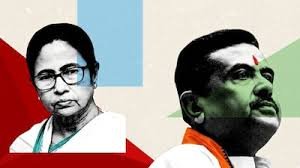
The Unstoppable Force of West Bengal: Understanding Mamata Banerjee
In the complex landscape of Indian politics, few figures are as polarizing, powerful, and persistent as Mamata Banerjee. As the Chief Minister of West Bengal and the founder of the All India Trinamool Congress (AITC), she has redefined the political narrative of Eastern India for over a decade.
But who is the woman behind the iconic white sari and the grassroots activism? To understand the current state of West Bengal, one must first understand the political trajectory of Mamata Banerjee.
The Rise to Power: From Activism to Chief Minister
Mamata Banerjee’s journey is a testament to the power of persistence. After spending years within the Indian National Congress, she broke away to form the Trinamool Congress, driven by a desire to challenge the long-standing hegemony of the Left Front in West Bengal.
Her ascent was not overnight. It was built on:
- n
- Grassroots Mobilization: Her ability to connect with the rural poor and marginalized communities.
- Strategic Defiance: Leading massive protests against land acquisition, most notably in Singur and Nandigram.
- A Distinct Identity: Positioning herself as a “daughter of the soil” fighting against external corporate and political interests.
Leadership Style and Social Welfare
Once in power, Banerjee shifted her focus toward aggressive social welfare programs. Her administration is well-known for implementing schemes aimed at healthcare, education, and women’s empowerment. By focusing on the most vulnerable sections of society, she solidified a loyal voter base that has kept her in power through multiple elections.
For those interested in the broader context of Indian governance, exploring the BBC News India section provides an excellent overview of how regional leaders like Banerjee influence national policy.
Challenges and Political Controversies
No political journey of this magnitude is without friction. Mamata Banerjee’s tenure has been marked by intense political rivalry and accusations of political violence within the state. Critics often point to the centralization of power within her party, while supporters argue that her strong-willed leadership is necessary to maintain stability in a volatile region.
Conclusion: The Legacy of a Political Trailblazer
Whether viewed as a champion of the poor or a controversial strongwoman, Mamata Banerjee remains an indispensable figure in the study of modern democracy. Her ability to navigate the treacherous waters of Indian politics ensures that she will remain a key player in the country’s future.
As West Bengal continues to evolve, the legacy of the “Didi” (elder sister) of Bengal will be measured by the sustainable development and social harmony she leaves behind.



