
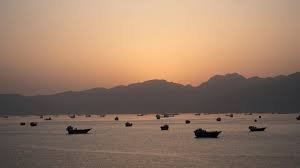
Project Freedom: US Intervention in the Strait of Hormuz and the Global Oil Trade
The Strait of Hormuz, the world’s most critical chokepoint for the oil trade, has become the center of a high-stakes geopolitical gamble. With approximately 20,000 seafarers currently stranded in these volatile waters, the United States has announced a massive naval initiative known as “Project Freedom.”
What is Project Freedom?
Launched by the US military, Project Freedom is designed to guide neutral merchant ships safely through the strait, which has been effectively shut since the onset of the Iran war. While US officials emphasize that this is not an escort mission, but rather a “humanitarian gesture,” the scale of the operation suggests a significant military footprint.
The operation is backed by a formidable force, including:
- Guided-missile destroyers to ensure naval presence.
- Over 100 land- and sea-based aircraft for aerial surveillance.
- Approximately 15,000 service members deployed to support the mission.
A Fragile Peace: Tensions with Iran
The move has not been met with universal approval. Senior Iranian official Ebrahim Azizi has explicitly warned that any US interference in the strait constitutes a violation of the current ceasefire. This friction creates a dangerous paradox: while the US aims to “restore freedom of navigation,” Iran views the move as a provocation.
Adding to the tension, recent reports from the UK Maritime Trade Operations (UKMTO) highlight the ongoing risks. Within the last 24 hours, two vessels were attacked in the strait—one by unknown projectiles and another by multiple small craft. Although the crews were reported safe, these incidents underscore the extreme volatility of the region.
The Human and Economic Cost
Beyond the political maneuvering, there is a dire humanitarian crisis. Thousands of sailors have been trapped for months, facing critical shortages of food, medical supplies, and fresh water. The mental distress and physical fatigue among these crews have reached a breaking point.
Expert Perspectives on the Blockade
Shipping industry leaders remain skeptical about whether a unilateral US operation can solve the deadlock. Bjørn Højgaard, CEO of ship manager Anglo-Eastern, notes that unblocking the strait requires cooperation from both sides.
“Announcements are one thing—safe and predictable passage is another,” Højgaard stated, emphasizing that without Iranian acceptance, the reality on the water remains unchanged.
Impact on the Global Oil Market
Because the Strait of Hormuz is vital for the flow of global oil, any prolonged instability directly threatens energy security and price stability worldwide. The US Central Command (CENTCOM) maintains that supporting merchant vessels is essential not only for regional security but for the stability of the global economy.
As President Donald Trump indicates that discussions with Iran are “very positive,” the world watches to see if Project Freedom will lead to a diplomatic breakthrough or further escalation in one of the world’s most sensitive waterways.



