Intel Stock: A Giant in Transition — Opportunity or Risk?
For decades, Intel has been the undisputed titan of the semiconductor world. However, recent years have seen the company face a series of headwinds that have left investors questioning the trajectory of Intel stock (INTC). From the rapid ascent of ARM-based architecture to the explosive growth of AI-driven GPUs, Intel is currently fighting to reclaim its throne.
For Canadian investors looking to diversify their tech portfolio, the question is simple: Is Intel a “value trap,” or is it a once-in-a-decade buying opportunity?
The Great Pivot: Intel Foundry Services
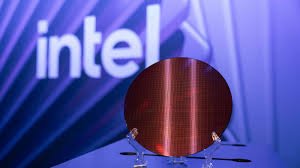
The core of Intel’s turnaround strategy lies in its massive bet on becoming a world-class foundry. Unlike its competitors who primarily design chips, Intel is investing billions into building the infrastructure to manufacture chips for other companies.
- Diversification: By opening its factories to third parties, Intel reduces its reliance on its own product success.
- Geopolitical Strategy: With the U.S. and allied nations pushing for “onshoring” semiconductor production to reduce reliance on Asia, Intel is perfectly positioned to receive government subsidies and contracts.
- Technological Leap: The push toward “5 nodes in 4 years” is an ambitious attempt to regain process leadership over TSMC.
The AI Challenge: Can Intel Catch Up?
It is impossible to discuss Intel stock without mentioning the AI revolution. While NVIDIA has captured the lion’s share of the AI accelerator market, Intel is fighting back with its Gaudi line of AI accelerators and integrating AI capabilities directly into its consumer CPUs.
The challenge remains: Intel must prove that its hardware can compete in efficiency and raw power with the specialized GPUs that currently dominate data centres. If Intel can successfully integrate AI across its product stack, we could see a significant re-rating of the stock price.
Financial Outlook and Valuation
From a valuation perspective, Intel often looks “cheap” compared to the sky-high multiples of other chipmakers. However, value is only a bargain if the company can return to growth. Investors should keep a close eye on:
- Dividend Sustainability: Changes in dividend policy often signal the company’s confidence in its cash flow.
- Capex Spending: The sheer cost of building new fabs is immense; monitoring how Intel manages this debt is crucial.
- Market Share: Watch for Intel’s ability to hold its ground in the laptop and desktop markets against AMD.
Final Verdict: Should You Invest?
Investing in Intel stock today is essentially a bet on the management’s ability to execute a complex turnaround. It is no longer a “safe” blue-chip stock, but rather a high-stakes play on the future of global chip manufacturing.
For more detailed financial data and real-time updates, we recommend checking Bloomberg or the Reuters financial section to track the latest market movements.