Ceasefire Efforts in the Middle East: A Comprehensive Update
The situation in the Middle East remains volatile, with ongoing fighting between Israel and Hezbollah in southern Lebanon even as diplomatic efforts to secure a ceasefire gain momentum. These developments are occurring against the backdrop of broader tensions between the United States and Iran, threatening to destabilize the region further.
Negotiations Between Israel and Lebanon
On Tuesday, the United States announced that Israel and Lebanon had agreed to “launch direct negotiations” aimed at ending the conflict between Israel and Hezbollah. This face-to-face meeting, hosted by U.S. Secretary of State Marco Rubio, is particularly significant given the lack of diplomatic relations between Israel and Lebanon. However, the success of these talks remains uncertain, as Hezbollah did not participate directly.
The Lebanese government’s limited control over Hezbollah, which operates as both a militia and a political party, presents a significant challenge to enforcing any potential agreement. Any diplomatic settlement would likely prove difficult to implement on the ground.
A Complex Web of Conflicts
The conflict in Lebanon is just one of three major points of contention in the broader U.S.-Israeli dynamic with Iran. The other key issues are Iran’s nuclear program and control of the strategically vital Strait of Hormuz, a critical choke-point for international energy trade.
Strait of Hormuz and Oil Markets
President Trump announced a move to cut off Iran’s oil income following the breakdown of high-level U.S.-Iranian negotiations in Pakistan. This led to the implementation of a U.S. Navy blockade in the Strait of Hormuz, aimed at restricting maritime traffic to and from Iranian ports. Despite the blockade, tracking data indicated that several ships, including some departing from Iranian ports, successfully passed through the strait.
The situation has had a noticeable impact on global oil markets. Brent crude, the global benchmark, remained below $100 a barrel, despite earlier spikes during the conflict, while stock markets experienced a rebound, with the S&P 500 rising by over 1 percent. Investors appear buoyed by the prospect of renewed talks.
Economic and Humanitarian Impact
The International Monetary Fund (IMF) has warned that disruptions to oil markets caused by the conflict could slow global growth, fuel inflation, and increase the likelihood of a global recession. The International Energy Agency (IEA) anticipates a decrease in oil demand in the current quarter. The conflict is also taking a heavy toll on civilian populations.
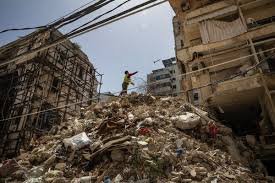
Reports indicate significant casualties in Iran, Lebanon, and Persian Gulf nations. Israel has also suffered casualties, including both soldiers and civilians. The Human Rights Activists News Agency reports at least 1,701 civilian deaths in Iran, while Lebanon’s health ministry reports 2,124 deaths in the recent fighting.
Israel’s Stance and Future Prospects
Israeli officials have refused to discuss a ceasefire with Hezbollah, focusing instead on disarming the group and establishing a lasting peace. Israel’s spy chief, David Barnea, stated that Israel’s mission will not be complete until the current Iranian regime is replaced. This suggests a long-term commitment to altering the political landscape in Iran.
Despite the ongoing conflict, diplomatic efforts continue. Italy is declining to renew a longstanding defense agreement with Israel, signaling a shift in its position. China is also calling for a return to peace and offering to play a more active role in negotiations.
Looking Ahead
The situation remains fluid and complex. While the talks between Israel and Lebanon represent a potential step towards de-escalation, the involvement of Hezbollah and the broader geopolitical tensions pose significant challenges. The future of the ceasefire, and the stability of the region, hinges on the willingness of all parties to engage in meaningful negotiations and compromise.
Further Reading: