Gas Prices Tomorrow: Navigating Uncertainty in a Volatile Market
The recent fragile ceasefire between Iran, the United States, and Israel offers a glimmer of hope, but experts caution that a return to pre-conflict oil and gas prices is likely a long way off. The disruption to global energy supplies, particularly through the Strait of Hormuz, has sent shockwaves through the market, impacting consumers worldwide.
The Strait of Hormuz: A Critical Chokepoint
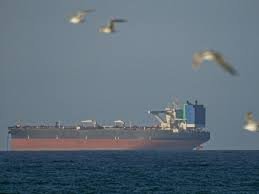
In response to recent conflicts, Iran temporarily restricted passage through the Strait of Hormuz, a narrow waterway through which approximately 20% of the world’s oil and gas exports pass, primarily to Asia and Europe. This action, coupled with attacks on energy infrastructure in Gulf countries, led to soaring prices not only for energy but also for related products like helium and fertilizers. The impact was particularly acute in developing nations across Asia and Africa.
“Anyone who tells you they know the answer to when prices will normalize is lying,” states Rockford Weitz, professor of practice in maritime studies at The Fletcher School at Tufts University. “It’s too early to tell.”
Current Market Conditions & Recovery Challenges
Prior to the conflict, roughly 120-140 ships traversed the Strait of Hormuz daily. However, in the days following the escalation, that number plummeted to as few as five vessels. This drastic reduction highlights the significant disruption to global oil markets. A full recovery requires a predictable and stable flow of cargo, a process that will take time and collaboration.
“What we’re seeing is the biggest disruption in the history of global oil markets,” Weitz explains. The process isn’t simply about reopening the strait; it requires cooperation from major global powers (US, China, and Russia) and regional players (UAE, Saudi Arabia, India, and Pakistan).
Concerns remain regarding potential additional costs, such as toll fees imposed by Iran and increased insurance premiums, which could further contribute to higher oil prices. While reports suggest Iran may be charging fees of around $2 million per vessel, experts believe these tolls are unlikely to be the primary driver of price increases. The core issue remains the safe passage of tankers.
Infrastructure Damage & Production Slowdowns
The reopening of the strait has revealed “signs of strain,” according to Usha Haley, W Frank Barton Distinguished Chair in international business at Wichita State University. Furthermore, some countries, including Iraq, temporarily halted production due to limited storage capacity, exacerbating supply shortages. Restoring full production capacity will take weeks, if not months.
Liquefied Natural Gas (LNG) supplies are also facing significant challenges, with infrastructure damage requiring months to rebalance. Even under ideal circumstances, normalization could take three to six months, and that assumes no further disruptions.
Global Economic Impact
The International Monetary Fund (IMF) has warned that it will downgrade its global economic forecast next week, anticipating slower growth even if the ceasefire holds. Interestingly, the conflict has had a limited impact on Russia and China, with Russia even benefiting from increased oil sales at higher prices. The US temporarily eased some sanctions on Russian oil to address supply concerns, allowing Moscow to capitalize on the situation.
Looking Ahead: Uncertainty and Potential Solutions
Experts agree that oil prices will remain elevated due to the increased risk premium associated with supplies from the Gulf. While a temporary boost in supply may occur as blocked oil and products are released, this support is contingent on the ceasefire holding and evolving into a broader agreement.
Iraq, with a potential production capacity of 3.5 million barrels per day, could play a crucial role in stabilizing oil flows. However, its own political instability and history of attacks raise concerns about its ability to consistently increase production. The question remains: “In that environment, who wants to invest in scaling up production?” asks Rachel Ziemba, adjunct senior fellow at the Center for a New American Security.
Ultimately, navigating the future of gas prices requires a long-term strategy and a clear understanding of global priorities. The coming weeks and months will be critical in determining whether fuel costs will stabilize or continue to fluctuate in this volatile market.
Follow Al Jazeera English for continued coverage.