Taiwan Expresses Concerns as Canada Reconsiders Trade Deal
A significant shift in Canada’s foreign policy has cast a shadow over its trade relationship with Taiwan. The Canadian government is currently re-evaluating a previously negotiated trade agreement with Taiwan, leaving Taiwanese officials expressing their “concern” over the potential implications. This change in course comes as the Carney government seeks to strengthen ties with China.
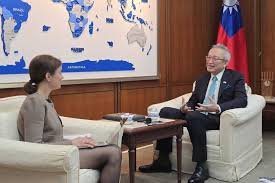
“Things have changed,” a senior Canadian government representative, speaking on condition of anonymity, explained. “Negotiations were completed, and subsequently, there have been significant shifts in the global economic landscape.” The two parties had successfully concluded negotiations in March 2025, according to Cynthia Kiang, Taiwan’s Vice Minister of Economic Affairs, during a meeting in Taipei. Since then, “we have been waiting for the Canadian side to sign,” she stated.
A Comprehensive Agreement on Hold
The proposed agreement encompassed a wide range of crucial areas, including digital trade, the energy transition, and supply chain resilience, as detailed by Ms. Kiang. She expressed hope for the agreement’s eventual signing, having visited Canada in November to advocate for its ratification. However, Ottawa is offering little immediate optimism.
A change in government in Ottawa has prompted a review of existing commitments. “Like any decision of a previous government, the current government has the right to review where things stand and whether it serves the priorities and interests of the current government,” the source clarified. Furthermore, pressures from the United States are reportedly influencing Ottawa’s agenda.
Navigating the ‘One China’ Policy
Ottawa refers to the potential agreement as a “commercial arrangement” rather than a “trade agreement” due to Canada’s longstanding “One China” policy, which prevents formal diplomatic relations with Taiwan. Despite this, Taiwan has functioned as a de facto independent state since 1949, facing ongoing pressure from Beijing. In February, Radio-Canada reported that Taipei suspected Ottawa of delaying the signing to avoid jeopardizing its relationship with China.
The senior Canadian government representative acknowledged the importance of strengthening ties with China, citing the recent visit by Prime Minister Carney to the country. However, they cautioned against directly comparing the two processes. Taiwan’s Vice Minister of Foreign Affairs, François Wu, voiced his anxieties, stating, “We encourage you to find your interests with China, to have good relations with China… But it should not all be established at the expense of Taiwan.”
China’s Conditions and Taiwan’s Diversification
Wu highlighted China’s tendency to impose preconditions on trade partners, including the recognition of Taiwan as an integral part of its territory, which he described as “very dangerous” for the island’s security. An incident in January, where two Liberal MPs were asked to leave Taiwan ahead of Prime Minister Carney’s meeting with Chinese President Xi Jinping, further fueled concerns.
Despite these challenges, Taiwan has emerged as a global economic powerhouse, ranking as the 20th largest economy in 2025 and a leading force in advanced semiconductor manufacturing. It is currently Canada’s 15th largest trading partner. “We are complementary by nature,” Kiang emphasized. “You have significant resources, while we have strong production capabilities.” The two nations also share democratic values and a commitment to human rights.
Continued Cooperation Despite the Pause
Since launching its Indo-Pacific Strategy in 2022, Canada has signed three economic agreements with Taiwan. The Canadian representative assured that despite the paused trade arrangement, cooperation has continued to deepen over the past year. Canada also joined the Global Cooperation and Training Framework in 2024, a U.S.-led platform that provides Taiwan with a space to share its expertise and strengthen ties with global partners.
“We have our interpretation of our One China policy, which is broad enough to discuss technical subjects [with Taiwan] without having a diplomatic relationship,” the source concluded.
Taiwan, historically reliant on China as its primary trading partner, is actively diversifying its economic relationships to reduce its dependence on Beijing. In 2023, the United States surpassed China as Taiwan’s largest trading partner. Exports to China have fallen from 43% to 26%, and Taiwanese investments in China have plummeted from 84% in the 2010s to less than 4% in 2025, driven by government incentives to expand into markets like Japan, South Korea, the United States, and Australia.
Semiconductor Industry Association provides valuable insights into the global semiconductor landscape.
Global Affairs Canada offers information on Canada’s trade agreements and foreign policy.