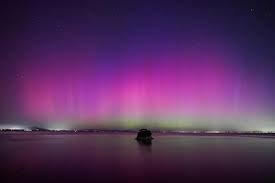
Unveiling the Mystical Aurora Borealis
The Aurora Borealis, also known as the Northern Lights, is one of nature’s most spectacular displays. A shimmering curtain of light dancing across the night sky, it’s a sight that captivates and inspires awe in all who witness it. But seeing the aurora isn’t just about luck; it’s about understanding the science behind it and knowing where and when to look. This guide provides a comprehensive **aurora borealis forecast** and everything you need to plan your own Northern Lights adventure.
What Causes the Aurora Borealis?
The aurora is caused by charged particles from the sun colliding with atoms in the Earth’s atmosphere. These particles travel along the Earth’s magnetic field lines, converging at the poles. When they collide with oxygen and nitrogen, they emit light of different colours – green, pink, red, yellow, and violet. The intensity and colour of the aurora depend on the type of particle, its energy, and the altitude of the collision. You can learn more about the science behind the aurora at the [Space Weather Prediction Center](https://www.swpc.noaa.gov/).
Understanding the Aurora Borealis Forecast
Predicting the aurora is complex, but several factors are considered in an **aurora borealis forecast**. The most important is the Kp-index, a scale from 0 to 9 that measures geomagnetic activity. A higher Kp-index indicates a stronger aurora and a greater chance of seeing it at lower latitudes. Here’s a quick guide:
* **Kp 0-3:** Aurora visible only at very high latitudes.
* **Kp 4:** Aurora may be visible in Canada and Alaska.
* **Kp 5:** Aurora visible in parts of the northern US (Michigan, Wisconsin, Minnesota).
* **Kp 6-9:** Aurora visible across much of North America and even parts of Europe.
Several websites provide reliable **aurora forecasts**, including:
* [SpaceWeatherLive](https://www.spaceweatherlive.com/)
* [Aurora Forecast](https://www.auroraforecast.is/)
* [NOAA Space Weather Prediction Center](https://www.swpc.noaa.gov/)
Best Locations to View the Aurora Borealis
To maximize your chances of seeing the aurora, you need to be in a dark location, away from city lights. Here are some of the best places to view the Northern Lights:
* **Alaska, USA:** Fairbanks is a popular destination with excellent viewing opportunities.
* **Yukon and Northwest Territories, Canada:** These regions offer pristine dark skies.
* **Iceland:** Easily accessible and with a high frequency of aurora activity.
* **Norway:** Tromsø is a well-known aurora viewing hub.
* **Sweden and Finland:** Lapland offers a magical winter wonderland experience.
Tips for Aurora Viewing
- **Check the forecast:** Monitor the Kp-index and cloud cover.
- **Find a dark location:** Get away from city lights.
- **Dress warmly:** Temperatures can be extremely cold.
- **Be patient:** The aurora can be unpredictable.
- **Use a tripod:** For long-exposure photography.
Witnessing the **aurora borealis** is a truly unforgettable experience. With a little planning and the help of an accurate **aurora borealis forecast**, you can increase your chances of seeing this breathtaking natural wonder. Don’t forget to check the local weather conditions and be prepared for a night under the stars!