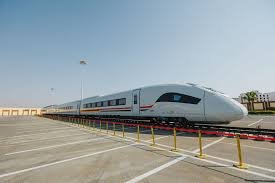
Africa’s Vision: A Transcontinental High-Speed Rail Network
Ambitious plans are underway to build a high-speed rail network across Africa, poised to connect countries, regions, and unlock a new era of economic growth. This transformative project aims to transport people at speeds of up to 320 kilometers per hour (199 mph) and freight at up to 120 kilometers per hour (75 mph), creating a transcontinental beltway that will reshape the continent’s landscape.
The Challenge of Track Gauge
Beyond the significant political and financial hurdles, a major challenge lies in the varying track gauges across Africa’s existing railways. Southern and Central Africa predominantly use Cape gauge (1.065-1.067 meters), while parts of East and West Africa employ meter/narrow gauge (0.95-1.0 meter). North Africa largely utilizes standard gauge (1.435 meters). This disparity stems from infrastructure planning during the colonial era, as explained by Eric Ntagengerwa, head of the transport and mobility division at the African Union (AU) Commission, in a CNN interview.
Current Rail Infrastructure in Africa
Currently, Africa has approximately 83,000 kilometers (52,000 miles) of railway – significantly less than the global average per square kilometer of land. Most lines extend inland from coastal ports, with limited interconnectivity, especially outside Southern Africa. Average speeds range from 35-50 kilometers per hour, and only a small percentage of the lines are electrified.
The African Union’s Agenda 2063
Recognizing the critical need for improved rail infrastructure, the African Union prioritized rail development in 2013 as part of its Agenda 2063. This initiative includes a 50-year masterplan to overhaul the continent’s railways, encompassing the African Integrated Railway Network and the African Integrated High Speed Railway Network (AIHSRN).
Priority Links and Pilot Projects
The first phase focuses on 13 priority links, connecting two to four countries. A key pilot project will connect Dar es Salaam, Tanzania, to Kigali, Rwanda, and onward to Kampala, Uganda. Eight links are already operational or under construction, with notable progress in the eastern corridor, including the Addis Ababa, Ethiopia, to Djibouti standard gauge line, completed in 2018 as part of China’s Belt and Road Initiative.
Connecting Landlocked Nations
A critical focus for the next phase is connecting landlocked nations in Central Africa. Ntagengerwa is advocating for increased construction along a central corridor within the next five to ten years.
Standardization and Interoperability
Ensuring seamless network integration requires adapting existing infrastructure and standardizing new construction. The AU has outlined specifications and standards to harmonize new projects, ensuring interoperability across borders. “You need to have an interoperable system, it needs to move seamlessly across countries,” Ntagengerwa emphasized.
The Master Plan: 73,000 Kilometers of Standard Gauge
The master plan, extending to 2043, envisions approximately 73,000 kilometers (45,000 miles) of standard gauge line connecting commercial and administrative centers – more than four times the current standard gauge length on the continent. Standard gauge will be utilized for high-speed sections, linking capital cities and tourist destinations.
Adapting Existing Infrastructure
While a complete replacement of narrow gauge lines isn’t planned, some links may be upgraded, made dual gauge, or equipped with interchange points utilizing variable track gauge technology. Electrification is also crucial for high-speed travel and potential emission reductions.
A Greener Future for African Rail
“Decarbonization of transport is another critical priority for us,” Ntagengerwa added, aligning with the global target of net-zero emissions by 2050.
Current High-Speed Rail in Africa
Currently, the only high-speed line in Africa operates between Tangier and Casablanca in Morocco. However, Egypt is developing a 2,000-kilometer high-speed network.
Financing and Future Prospects
Financing the transcontinental network will require a combination of public-private partnerships, concessions, and government funding. A pan-African agency is envisioned to coordinate financing and bring countries together. The AU estimates the network could reduce transport costs by 40% and increase intra-African trade by 35%, potentially raising Africa’s share of global trade from 2% to 12% by 2045.
As Ntagengerwa notes, roads currently handle 70% of goods transport but are often congested. The railway is expected to supplement road transport in the coming years, offering a more efficient and sustainable solution.
Source: CNN