‘Ma Fille Tu Seras Libre’: A Harrowing Look at Forced Marriage
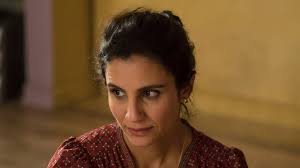
“You sold me to an old man.” These stark words open ‘Ma Fille Tu Seras Libre’ (My Daughter, You Will Be Free), immediately setting a somber tone for the tragedy that unfolds. The film transports us to the early 2000s, with a scene suggesting Afghanistan (though filmed in Cyprus) featuring a young girl uttering these heartbreaking lines. We then jump forward twenty years to find Zarmina, a woman with long black hair, crouched in a kitchen, her sweater stained with blood. “You are under arrest.” The identity of the victim and the reason for the arrest remain initially unclear, but are clearly linked to the opening scene.
Bachir Bensaddek’s third feature film (following ‘La Femme Cachée’ and ‘Montréal la Blanche’), with a screenplay by Marie Vien (‘Le Temps d’un Été’, ‘Arlette’, ‘La Passion d’Augustine’), directly confronts the disturbing and often unspoken issue of forced marriage – and all its ramifications. The film explores the violation of rights, the weight of tradition, and the theft of lives.
“Women are never free in Afghanistan,” the young girl declares, having been sold by her father to a 65-year-old man for a meager amount of land, food, and four cows. “Inch’Allah,” the deal is sealed. But the story doesn’t end there. Desperate to save her daughter, her mother secretly arranges a marriage to a younger man exiled in Canada. However, this freedom comes at a price: she must, in turn, promise her own daughter (Saba Vahedyousefi, captivating in her role) in marriage at the age of 15. The narrative is complex, but thankfully, the film skillfully navigates the timelines – past and present, Afghanistan and Canada – aided by Catherine Major’s evocative score.
The film’s courage in tackling such a sensitive and tragically relevant subject is commendable, especially given the Afghan heritage of many involved in the production. Wazhma Bahar delivers a powerful performance as Zarmina, the mother with a tragic fate, alongside Saboor Sahak (her husband), Paeman Arianfar (the uncle), and Firuz Ali Nazar (making his film debut as the son). Julie Le Breton, as a friend, provides a convincing, though perhaps unlikely, presence. While the effort to diversify the cast is laudable, the acting quality is uneven. Some scenes, particularly those between mother and daughter, are profoundly tender. Others, especially those between siblings, feel forced and unnatural. The screenplay also suffers from shortcuts and implausibilities – such as a grandmother making a phone call from Afghanistan to her daughter in prison – which occasionally strain credibility.
Despite these flaws, the film’s message resonates deeply. It concludes with a chilling dedication: in 2010, another Zarmina was beaten by her brothers for writing lines of love and poetry, ultimately leading to her self-immolation. This stark reality is a compelling reason to see this film.
Where to Watch & Further Information
Currently playing in theatres. For more information on the issue of forced marriage, consider visiting The United Nations Population Fund (UNFPA) and The Forced Marriage Unit (UK Government).