AMD Ryzen 9 9950X3D2: Bridging the Gap Between Gaming and Creation
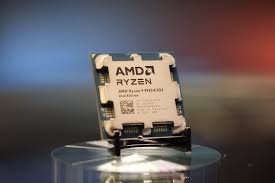
AMD has consistently dominated the PC gaming CPU landscape with processors like the Ryzen 7 9850X3D. But instead of resting on its laurels, Team Red has pushed the boundaries further. Introducing the AMD Ryzen 9 9950X3D2 Dual Edition – a processor designed to eliminate the choice between a dedicated gaming or creator CPU. This innovative chip doubles down on AMD’s lauded 3D cache technology, offering developers and creators unprecedented on-chip memory.
What Makes the Ryzen 9 9950X3D2 Different?
The Ryzen 9 9950X3D2 isn’t just an incremental upgrade; it’s a significant leap forward. AMD’s Jack Huynh explained the goal: to build a chip where users “no longer have to choose between a gaming or creator CPU.” The key difference lies in the expanded 3D cache, now spanning across two core complex dies (CCDs) instead of one. This means more memory accessible at faster speeds, benefiting both gamers and professionals.
Despite the architectural changes, the 9950X3D2 retains the 16-core, 32-thread configuration of its predecessor, the Ryzen 9 9950X3D. However, the real game-changer is the massive 208MB of 3D cache – a substantial increase from the previous 144MB. This increased cache capacity is designed to accelerate demanding tasks in both gaming and content creation.
Power Consumption and Performance
The increased cache and enhanced capabilities come with a trade-off: power consumption. The Ryzen 9 9950X3D2 boasts a Total Design Power (TDP) of 200W, making it the most power-hungry CPU in AMD’s current lineup. Interestingly, the boost clock speed is slightly reduced to 5.6GHz, compared to the 5.7GHz of the 9950X3D.
AMD’s 3D cache technology works by stacking layers of cache directly on top of the CPU die, reducing latency and increasing memory access speeds. While initially focused on gaming, AMD believes creative professionals can also leverage this extra memory for tasks like 3D rendering and code compilation. AMD claims performance boosts of 7% to 13% in applications like Unreal Engine.
How Does it Compare?
To put the cache size into perspective, the Ryzen 7 9800X3D features 104MB of cache. While doubling the memory is impressive, the real-world performance gains in non-creative applications remain to be seen. The Ryzen 7 9850X3D, with its 8 cores and 16 threads, proved to be a gaming powerhouse due to its fast memory access. There’s a potential point of diminishing returns, even with today’s most demanding titles.
Pricing and Availability
The Ryzen 9 9950X3D currently retails for around $700, even more than the Ryzen 7 9850X3D at $500. The increased on-die memory will likely translate to a higher price point for the 9950X3D2 Dual Edition. The chip is scheduled to launch on April 22nd, so we’ll have a clearer picture of the pricing soon.
The Competition: Intel’s Response
Intel has been attempting to challenge AMD’s gaming CPU dominance with its Core Ultra series. However, Intel’s recent offerings have focused on the midrange market. The Core Ultra 200S Plus series aims to deliver Intel’s best gaming performance, but a $300 CPU still falls short of AMD’s $500 X3D processors. Intel has confirmed it won’t be releasing a high-end Core Ultra 9 290K Plus to directly compete with AMD’s high-end CPUs, suggesting we’re still a generation away from a true head-to-head battle.
Learn more about the latest CPU technology at AMD’s official website.