Understanding the 2024 Atlantic Hurricane Season
As the June 1st start of the Atlantic hurricane season approaches – just 68 days away – early forecasts are beginning to emerge. AccuWeather, a leading private weather company, released its seasonal outlook on March 25th, with predictions from Colorado State University and the National Oceanic and Atmospheric Administration (NOAA) to follow in April and May, respectively. These forecasts are crucial for understanding potential risks and preparing accordingly.
The Influence of El Niño
A strong El Niño is anticipated to develop over the summer. Historically, El Niño patterns can dampen storm activity in the Atlantic basin. However, it’s vital to remember that some of the most devastating hurricanes have occurred during El Niño years, such as Hurricane Michael in 2018 and Hurricane Andrew in 1992. This underscores a critical point: seasonal forecasts shouldn’t breed complacency.
As Craig Fugate, a former FEMA administrator, emphasizes, “Seasonal forecasts are never designed to tell a family whether their home is going to be hit.” He warns against interpreting a “below-average season” forecast as a guarantee of safety. “History says otherwise. Seasonal forecasts are about how busy the ocean might be. Disasters are about where one storm goes.”
Key Concerns for the 2024 Season
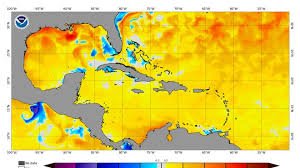
Two primary concerns are emerging for the 2024 hurricane season: exceptionally warm ocean water and the potential for rapid intensification of storms close to the U.S. coast. While El Niño may contribute to near or below-average overall activity, the Gulf Coast remains particularly vulnerable. As Fugate notes, “The Gulf plays by different rules.”
AccuWeather’s forecast indicates a higher-than-average risk of direct hits for the northern and eastern Gulf Coast, as well as the Carolinas. Conversely, central and southern Texas may experience a lower-than-average risk. The historical average for named storms in the Atlantic is 14, and AccuWeather predicts a 40% chance of exceeding this number in 2024, with a 15% chance of more than 16 storms.
Preparation is Paramount
Alex DaSilva, AccuWeather’s lead hurricane expert, stresses the importance of consistent preparedness: “It’s very important that everybody from South Texas all the way to Maine prepares equally for each and every hurricane season, regardless of the forecast.”
Even with El Niño’s potential dampening effect, warm water temperatures are already above normal in parts of the Atlantic basin and are expected to become exceptionally warm this summer. This creates a “recipe for rapid intensification,” as seen with Hurricane Michael, which intensified from 115 mph to 160 mph in under 24 hours.
Lessons from Recent Seasons
While the U.S. mainland avoided a hurricane landfall in 2023, the 2023 season was still significant, producing three powerful Category 5 hurricanes, including Hurricane Melissa, whose impacts led to its name being retired. The season resulted in at least 95 fatalities and included 13 named storms, five hurricanes, and four major hurricanes.
2024 Hurricane Names
Here’s a list of the names assigned to potential tropical storms and hurricanes this summer:
- Wilfred – WILL-fred
- Arthur – AR-thur
- Bertha – BUR-thuh
- Cristobal – krees-TOH-bahl
- Dolly – DAH-lee
- Edouard – eh-DWARD
- Fay – fay
- Gonzalo – gohn-SAH-loh
- Hanna – HAN-uh
- Isaias – ees-ah-EE-ahs
- Josephine – JOH-seh-feen
- Kyle – KY-ull
- Leah – LEE-ah
- Marco – MAR-koe
- Nana – NA-na
- Omar – OH-mar
- Paulette – pawl-LET
- Rene – re-NAY
- Sally – SAL-ee
- Teddy – TEHD-ee
- Vicky – VIH-kee
Stay informed and prepared. Your safety depends on it.
USA Today provides ongoing coverage of weather events and climate change.