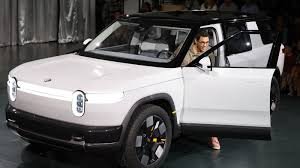
Rivian is rapidly becoming a household name in the electric vehicle (EV) space, and for good reason. Founded in 2009, this American automotive manufacturer is challenging established players like Tesla, Ford, and GM with its focus on adventure vehicles – specifically, electric trucks and SUVs. But Rivian is more than just another EV company; it represents a shift in how we think about vehicle utility, sustainability, and the outdoor lifestyle.
The Rivian Story: From Vision to Reality
Initially operating under a shroud of secrecy, Rivian unveiled its first vehicles – the R1T pickup truck and the R1S SUV – to widespread acclaim in 2018. The company’s founder and CEO, RJ Scaringe, envisioned a brand that catered to those who wanted to embrace an active lifestyle without compromising on environmental responsibility. This vision resonated with a growing segment of consumers eager for sustainable alternatives in the automotive market.
Rivian’s Key Models: R1T and R1S
The Rivian R1T is a groundbreaking electric pickup truck. It boasts impressive performance figures, including a 0-60 mph acceleration time of as little as 3 seconds (depending on configuration), and a range exceeding 400 miles. Beyond its power, the R1T is packed with innovative features like the “Gear Tunnel” – a unique storage space between the cab and the bed – and a built-in air compressor. It’s designed for both on-road comfort and serious off-road capability. You can learn more about the R1T’s specifications on Rivian’s official website.
The Rivian R1S is the company’s all-electric SUV. Sharing the same platform and powertrain options as the R1T, the R1S offers a spacious and luxurious interior, seating up to seven passengers. It’s equally adept at navigating city streets and tackling challenging terrain. The R1S is a compelling alternative to traditional luxury SUVs, offering a blend of performance, practicality, and sustainability. Explore the R1S features at Rivian’s R1S page.
Technology and Innovation at the Core
Rivian isn’t just about building electric vehicles; it’s about pushing the boundaries of automotive technology. The company’s “skateboard” platform – a modular chassis housing the battery pack and drive units – allows for flexible vehicle designs and optimized performance. Rivian also invests heavily in software development, offering a sophisticated driver-assistance system and over-the-air updates to continuously improve vehicle functionality. Their commitment to technology extends to their charging network, aiming to provide convenient and reliable charging options for Rivian owners.
Challenges and the Future of Rivian
Despite its early success, Rivian faces challenges common to all new automotive manufacturers, including scaling production, managing supply chain constraints, and establishing a robust service network. However, with significant investment from companies like Amazon (who has ordered 100,000 electric delivery vans from Rivian), and a strong brand reputation, Rivian is well-positioned for future growth. The company is also exploring new vehicle segments and technologies, hinting at a broader range of electric offerings in the years to come. For the latest updates on Rivian’s progress, check out Reuters’ Rivian coverage.
Rivian represents a bold vision for the future of transportation. By combining innovative technology, sustainable practices, and a focus on the outdoor lifestyle, Rivian is carving out a unique space in the rapidly evolving EV market. It’s a company to watch closely as it continues to disrupt the automotive industry.