Iran War Fuels Surge in Gas Prices: What You Need to Know
A significant disruption to global oil production has propelled crude prices above the $100 per barrel mark for the first time in nearly four years. As the conflict with Iran persists, the potential for even higher oil prices looms large. The situation is creating considerable anxiety in the energy markets and impacting consumers at the pump.
Initial Price Shock and Market Reaction
Oil prices briefly approached $120 a barrel before reports indicated Western nations were considering measures to alleviate rising fuel costs. This news offered a temporary reprieve, but the underlying pressures remain. US crude settled at $94.77 a barrel on Monday, a 4.3% increase, while the international benchmark, Brent, rose 6.8% to $98.96 a barrel. This marks a return to triple-digit oil prices not seen since March 2022, following Russia’s invasion of Ukraine.
Key Factors Driving Up Oil Prices
The escalating tensions with Iran are primarily responsible for the price surge, stemming from two critical factors:
- Threats to the Strait of Hormuz: Iran has threatened attacks on tankers transiting this vital waterway, through which approximately 20% of the world’s oil supply passes. This has led to a significant slowdown in oil shipments.
- Reduced Middle Eastern Oil Production: The conflict has effectively curtailed oil production in the Middle East, exacerbating supply concerns.
According to Rapidan Energy Group, the current disruption to supply through the Strait of Hormuz is roughly twice the scale of the disruption experienced during the Suez Crisis of 1956-1957.
Impact on Global Oil Capacity
The war has also eliminated spare oil production capacity, as Saudi Arabia and the United Arab Emirates have been effectively sidelined from global markets. Spare capacity acts as a crucial buffer in energy markets, allowing for a rapid increase in production when needed. Bob McNally, founder and president of Rapidan, notes, “The result is a market with no meaningful cushion. There is no swing producer to step in.”
Gas Prices at the Pump
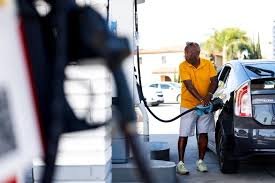
The surge in oil prices is directly translating to higher gasoline prices for consumers. US gas prices have risen approximately 50 cents in a week, reaching $3.48 a gallon – a level not seen during former President Donald Trump’s tenure.
Long-Term Outlook and Potential Solutions
Despite the current volatility, the world isn’t facing an overall oil shortage. Prior to the conflict, a supply glut existed, with oil trading around $60 a barrel. However, the duration of the war is a key concern. Oil futures for delivery in 2027 and 2028 are currently trading in the high $60s, suggesting traders don’t anticipate sustained $100+ oil prices.
Homayoun Falakshahi, lead crude research analyst at Kpler, suggests that if traffic around the Strait of Hormuz doesn’t improve by the end of March, oil prices could reach $150 a barrel.
Government Intervention and Mitigation Efforts
Governments are actively seeking solutions to alleviate price pressures. The G7 finance ministers are scheduled to discuss a coordinated release of oil reserves. The US administration is also exploring plans to provide insurance and naval escorts for oil tankers, although shipping companies remain hesitant to navigate the region while the conflict continues.
Ultimately, resolving the situation in the Strait of Hormuz is crucial to stabilizing oil prices. As Dan Pickering, founder and chief investment officer at Pickering Energy Partners, states, “The higher the price goes, the more pressure on the [US] administration to do something to protect the strait… A reinforcing cycle.”
Stay tuned for further updates as this situation evolves.
Source: CNN