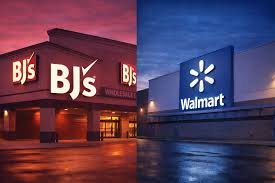
Walmart Stock: A Deep Dive into Growth and Valuation
NEW YORK, March 9, 2026 – As of 10:10 a.m. EDT on Monday, Walmart (WMT) experienced a slight dip of around 0.7%, while BJ’s Wholesale Club saw a more significant decline of 1.3% amidst a broader sell-off in U.S. stocks. Investors are keenly observing Walmart’s premium valuation and its ability to sustain profit growth. This is a critical point, as investors are increasingly favoring retailers who can maximize profits from strong store traffic and digital advancements, particularly through high-margin areas like advertising and membership programs.
The Rise of Advertising and Membership Revenue
Despite potential consumer hesitation on discretionary spending, the trend of increased revenue from these sources continues. Recent reports indicate that nearly a third of Walmart’s operating income in the last quarter originated from advertising and membership fees. This demonstrates a successful diversification strategy and a growing reliance on these higher-margin revenue streams.
Walmart’s Recent Performance: A Strong Quarter
Walmart’s most recent quarterly results paint a picture of robust growth. Revenue increased by 5.6%, while operating income surged by an even more impressive 10.8%. Globally, e-commerce sales experienced a remarkable 24% increase, and advertising revenue jumped by 37%. Fitch analyst David Silverman highlighted Walmart’s scale and infrastructure as key drivers for capitalizing on e-commerce growth. Fitch Ratings provides further insights into retail sector analysis.
BJ’s Wholesale Club: Growth with Challenges
BJ’s also demonstrated top-line growth, with total revenue up 5.6% and membership fee income increasing by 10.9% to $129.8 million. Digitally enabled comparable sales, a crucial metric, rose by 31%. However, operating income saw a slight decrease of 0.2%. A narrowing of merchandise gross margin, coupled with increased selling and administrative costs related to new club and gas station rollouts, contributed to this decline.
Leadership Perspectives and Future Outlook
Bob Eddy, CEO of BJ’s, attributed the company’s success to the “strength of our transformation,” noting 16 consecutive quarters of traffic gains. Finance head Laura Felice expressed confidence in the company’s long-term strategy, projecting adjusted EPS between $4.40 and $4.60 for fiscal 2026 and outlining approximately $800 million in capital expenditures.
Valuation Comparison: Walmart, BJ’s, and Costco
Currently, Walmart trades at a price-to-earnings (P/E) ratio around 35, while BJ’s is closer to 20. Costco stands out with a P/E ratio near 48, following a recent report of 6.7% growth in same-store sales (excluding gas). D.A. Davidson analyst Michael Baker considers Costco a “safe haven” investment. Costco’s official website provides details on their performance.
The Competitive Landscape: Walmart vs. Amazon
The retail competitive environment is intensifying. Walmart recently surpassed a $1 trillion market capitalization – a first for any retailer – driven by faster delivery, marketplace expansion, and a thriving advertising business generating around $4 billion in revenue. Walmart’s aggressive push against Amazon in the e-commerce space is a significant factor. This competitive pressure underpins the premium valuation assigned to Walmart’s stock.
Investor Sentiment and Future Considerations
Despite the positive momentum, the outlook isn’t entirely settled. Walmart’s full-year forecast is cautious, and analysts like Greg Melich of Evercore ISI suggest management tends to be conservative in early projections. A slowdown in consumer demand or slower growth in advertising and memberships could challenge the stock’s premium valuation. BJ’s, with its lower multiple, offers some buffer, but continued expansion may lead to increased costs.
Conclusion: Walmart’s Position as a Leader
Currently, investors favor Walmart due to its size, diversified revenue streams, and higher-margin businesses. BJ’s faces the challenge of demonstrating that its online growth and new locations can translate into increased profitability, not just revenue. The market is rewarding Walmart for its ability to navigate the evolving retail landscape and deliver consistent growth.
© 2026 – ALL RIGHTS RESERVED.