Merkel’s Shadow: Germany’s Role in a Escalating Middle East Conflict
As of March 2, 2026, concerns are mounting over further escalation following the attacks by Israel and the USA on Iran. What are the implications of this conflict for Germany, and how significant is the influence of the German government?
A Chancellor on the Sidelines
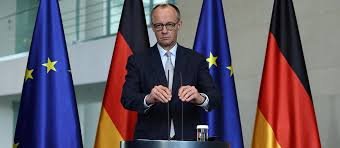
Chancellor Friedrich Merz finds himself largely observing from the sidelines, receiving the same limited consultation as other European Union leaders. This reality isn’t new to Merz, as he acknowledged at the Munich Security Conference in mid-February: “The international order, based on rights and rules, is on the verge of being destroyed. (…) This order, as imperfect as it was at its best, no longer exists in the same form.” He described Europe’s role as having “collectively crossed the threshold into a time once again marked by power and, above all, great power politics.” This sentiment applied to the US military action against Venezuela and now resonates even more strongly with the situation in Iran.
This realization significantly limits the Chancellor’s options, particularly as he prepares for a trip to the United States. Today, Merz will meet with US President Donald Trump at the White House.
Limited Leverage and a Difficult Dilemma
Unlike some other European governments, Germany was informed shortly before the attacks against Iran began. However, does this provide the Chancellor with more room to maneuver? He doesn’t believe so. “Legal classifications will have little effect,” Merz soberly stated on Sunday, especially if they remain largely without consequence. “Appeals from Europe, including Germany, the condemnation of Iranian violations of law, and even extensive sanctions packages have had little impact over the years and decades. This is also because we were not prepared to enforce fundamental interests with military force if necessary. Therefore, now is not the time to lecture our partners and allies.”
The German government refrains from labeling the military strikes as a violation of international law, framing its dilemma with the attacks: “There is no ideal time to undertake something like this, but there may be a time when it is too late.” The tightrope Merz will walk during his meeting with Trump in Washington is a delicate one. He hopes to represent European interests based on his relatively good relationship with the US President, including highlighting the connection between Iran and Ukraine.
“Anyone who wants security, peace, and justice in the Middle East must also want it in Europe. That’s why the German government bears a large share of the support for Ukraine against Russian aggression in transatlantic burden-sharing. Therefore, we do not lecture our partners on their military strikes against Iran.” The Chancellor’s guiding principle: avoiding lecturing Trump, even if critics accuse him of losing sight of, or even betraying, the principles of international law.
Echoes of the Past: The JCPOA and Diminished Influence
The limited influence of Germany, and indeed Europe, is also evident in retrospect. Germany played a significant role in the 2015 Iran nuclear agreement (JCPOA), alongside the permanent members of the UN Security Council – France, Great Britain, the USA, China, and Russia. At the time, it was referred to as E3 + 3. The agreement was hailed as a historic diplomatic success. However, three years later, the agreement was effectively dismantled with the withdrawal of the USA under the first presidency of Donald Trump. All rescue attempts failed. All that remains are the E3, without the “plus 3,” without the major powers.
The three European governments have voiced their concerns once again. Germany, France, and Great Britain coordinate as best they can on international conflicts. But their voice is fading. Because they do not speak for the entire European Union, and because they interpret things differently among themselves. This is also the case now. In a statement, the three governments assure they will take the “necessary measures” to “defend our interests and those of our allies in the region.” This could also “include proportionate defensive military measures to destroy the ability of Iran to launch rockets and drones at the source.” Foreign Minister Johann Wadephul clarified in Deutschlandfunk on Monday morning that each of these three members will interpret what this means for themselves. “For us, this means nothing more than that our Bundeswehr soldiers would defensively defend themselves if they were attacked; beyond that, there will be no further measures from a German perspective.” Great Britain is making its military bases available to the USA.
Consequences for Germany and Europe
The war in Iran also has consequences for Germany. There is concern about escalation and the fear of potential terrorist attacks. Security services are monitoring the situation, with a focus on protecting Jewish, Israeli, and US facilities. The Bundeswehr is also affected. While only a small number of soldiers are stationed in the region, there have already been attacks against two multinational bases where Germans are deployed – a “low double-digit number” in Iraqi Erbil, and a “low three-digit number” in Jordanian Al-Azraq. However, the shelling from Iran has not yet reached a point where “proportionate defensive military measures” are being considered, as announced by the E3.
Chancellor Merz consistently emphasizes his close coordination and exchange with Israel, the USA, and the Europeans. This is a matter of course. In the current situation, he can likely do little more. He does not hide his concerns about the developments in Iran. “We do not know whether the plan will work to enable a political change from within through military strikes from the outside. (…) The comparison with Afghanistan, Iraq, and Libya is certainly only partially valid. But it does show how real the risks are in the medium term. We in Europe and Germany would also have to bear their consequences.” Because even those who only observe from the sidelines are not protected from the consequences.
Sources: