Cathay Pacific and the ‘Hole in the Sky’: How Middle East Disruptions Impact Global Air Travel
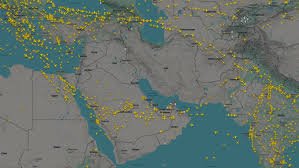
Open the airplane-tracking website Flightradar24, and the change is immediately apparent. Where a bustling network of aircraft connecting Europe, Asia, and Africa should be, there’s now a significant gap – a veritable ‘hole in the sky’. As conflict escalates in the Middle East, vast areas of regional airspace have closed or emptied, creating ripple effects far beyond the immediate conflict zone. This has significant implications for airlines like Cathay Pacific, and travellers worldwide.
The Middle East: A Crucial Aviation Hub
For decades, Europe-to-Asia air traffic has relied heavily on routes through the Middle East. This region is home to major aviation hubs like Dubai International Airport, Hamad International Airport, and Zayed International Airport, and airlines such as Emirates, Qatar Airways, and Etihad Airways, whose business models are built on connecting East and West. When this airspace is restricted, the consequences are immediate and global.
Rerouting and Rising Costs
When airspace closes, flights must reroute, adding time, burning more fuel, and creating complications for crews and aircraft – ultimately leading to higher costs. Aircraft are displaced, crews stranded, and uncertainty mounts regarding aircraft insurance, ticket prices, and operational sustainability. Cathay Pacific, like other international carriers, is actively managing these challenges.
Tony Stanton, consultant director of Strategic Air in Australia, describes Middle Eastern airspace as “a high-capacity bridge” between Europe and Asia. “When that bridge collapses, or the bridge closes, the traffic doesn’t largely disappear,” Stanton explains. “It tends to funnel either north or south into those two main corridors, and then what we see is those two corridors become very congested because they’re narrow corridors.”
Navigating a Complex Situation
Airlines can’t simply fly anywhere they like. They require permission to overfly each country’s airspace and must route through open, air traffic control-managed areas. Obtaining these permissions for previously unused airspace adds another layer of complexity.
Airlines prepare for geopolitical volatility with sophisticated risk-monitoring systems, modelling contingencies before closures occur. New flight plans are calculated, fuel loads adjusted, and crews repositioned through a “well-oiled process.” However, prolonged disruption can strain even the most robust systems.
Historical Precedents and Current Impacts
The current situation echoes past aviation shocks, including the COVID-19 pandemic, the 2010 Icelandic volcano eruption, and the ongoing rerouting caused by the Russia-Ukraine war. For example, Japan Airlines Flight JL43 from Tokyo to London now flies eastward over the Pacific, Alaska, and Canada – adding 2.4 hours and burning approximately 5,600 extra gallons of fuel per flight, a roughly 20% increase.
The Financial Implications
These detours come at a cost. While long-haul aircraft carry contingency fuel, extended operating times may require additional crew members or even fuel stops. Brendan Sobie, a Singapore-based aviation analyst, notes that fuel stops add significant costs. Airlines are partially covered by war risk insurance, but insurers may increase premiums as risk levels rise. Furthermore, oil prices, sensitive to Middle East conflict, add another variable to the equation.
While immediate hikes in flight prices are unlikely, sustained disruption could lead airlines to incorporate increased operating costs into ticket prices. Cathay Pacific will undoubtedly be assessing these factors.
Operational Challenges and Crew Safety
The operational consequences extend beyond fuel. Many crew members and aircraft are currently stranded in affected regions, contributing to flight chaos globally. Airlines activate reserve crews, swap aircraft, and even cancel flights to reset their networks. Employee safety is paramount, with airlines providing accommodation while awaiting updates on airspace reopening.
Emirates has already announced a limited resumption of some services. The focus remains on keeping crew safe and returning to normal operations as quickly and safely as possible.
Looking Ahead
The longer the disruption lasts, the longer the recovery will take. A complete reopening of airspace would simplify the situation, but a partial reopening with limitations presents ongoing challenges. However, major airlines employ structured intelligence, informed risk assessments, and specialist teams to make careful decisions about flight operations. As Stanton concludes, “I personally would be comfortable to jump on a British Airways or a Qantas or Cathay Pacific aircraft if that aircraft was operating, because I have comfort in the systems and the risk assessments that the airlines would be running in the background to operate their assets.”
Source: CNN