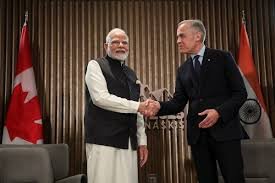
Canada-India Relations: A Critical Test in a Changing World
The recent trip by Prime Minister Mark Carney to India, coupled with the forthcoming Comprehensive Economic Partnership Agreement (CEPA) negotiations, signals an unprecedented level of engagement between Canada and India. This heightened interaction isn’t merely a bilateral affair; it represents a critical test case for the ‘Carney Doctrine’ – a vision for middle-power cooperation in an increasingly competitive geopolitical landscape.
Understanding India’s Perspective
For Canada, navigating the trade complexities with the U.S. is about preserving a high standard of living. However, for India, the stakes are fundamentally different. India, now the world’s largest developing country, is focused on securing its economic development path, a path historically reliant on foreign investment and access to global supply chains. The current global climate, marked by trade wars and geopolitical tensions, threatens this progress.
The Impact of US Trade Policies
The rise of China, fueled by foreign investment and trade surpluses, inadvertently contributed to the deindustrialization experienced by the U.S. India recognized this shift early on and initially engaged with the Trump administration, seeking positive signals on defense, energy, trade, and investment. However, the imposition of tariffs – including a 26% tariff under the “Liberation Day” program and a further 25% on Indian exports due to disagreements over Russian oil sanctions – disrupted this progress.
Ultimately, an interim trade agreement was reached, with India reducing tariffs on U.S. exports in exchange for a lowered 18% tariff on its own exports. The U.S. also leveraged market access to secure political concessions, a tactic employed with numerous countries. While not officially acknowledged, the U.S. claims India has agreed to limit its purchases of Russian oil.
An Opportunity for Canada: A Different Approach
This situation presents a unique opportunity for Canada. While the U.S. often adopts a coercive approach to trade negotiations, Canada can offer a contrasting model – one built on persuasion, partnership, and mutual benefit. As Canada negotiates the CEPA, it should prioritize a path to economic development that aligns with India’s interests.
Beyond Traditional Free Trade Agreements
Traditional Free Trade Agreements (FTAs), while important, may offer limited market access given India’s development circumstances and economic structure. A broader, more imaginative approach is needed. Canada should focus on targeted partnerships that drive de facto market access preferences for Canadian businesses.
Areas for Collaboration
- Nutritional Security: Canadian agri-processing and R&D capabilities can enhance India’s food security, creating opportunities for Canadian agricultural exports.
- Digital Technologies: Collaboration in the digital sector offers mutual benefits.
- Energy: Joint ventures in the energy sector can address India’s growing energy needs.
- Investment: Canadian pension funds can explore investment opportunities in India.
By emphasizing tangible cooperation, Canada can forge a strong partnership with India – a strategic middle power – bolstering both geopolitical alliances and Canadian economic growth. This is a chance to demonstrate a different path forward in international relations, one based on collaboration rather than coercion.
Source: The Globe and Mail