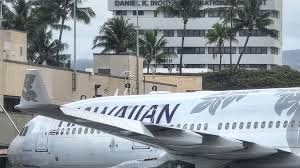
Hawaiian Airlines: A New Chapter Under Alaska Airlines
For years, a flight to Hawaii evoked images of wide-body aircraft – two aisles and a cabin designed for long-distance travel. Hawaiian Airlines wasn’t merely an operator of these planes; its brand, route network, and even the very perception of a Hawaiian vacation were intrinsically linked to them. Hawaii wasn’t treated as just another domestic destination; it felt like a journey to a faraway paradise.
While other U.S. carriers utilized wide-bodies for routes originating on the East Coast and from major hubs, airlines like Alaska, American, Delta, and United primarily relied on narrow-body aircraft for West Coast-Hawaii flights. Hawaiian Airlines distinguished itself as the last carrier to build its long-haul identity entirely around wide-body service, boasting a fleet of 24 Airbus A330s and initial plans for expansion with Boeing 787 Dreamliners.
However, financial challenges led to Hawaiian Airlines’ acquisition by Alaska Airlines, a carrier historically operating 737s to Hawaii. While Alaska has successfully reduced Hawaiian’s losses by roughly half, achieving profitability remains a work in progress. The airline’s current fleet plan, filed with regulators, reflects this financial pressure and signals a significant shift in strategy.
The Changing Fleet Landscape: 2028 and Beyond
Analyzing the Hawaiian (Alaska) 10-K filing from February 12th reveals a clear trajectory. Currently, the fleet consists of 24 Airbus A330-200 aircraft, the backbone of Hawaiian’s long-haul operations. These aircraft serve mainland routes and international services around the Asia-Pacific region. Through 2027, the A330 count will remain stable. However, 2028 marks a turning point: four A330s are scheduled for retirement, reducing the total to twenty.
This reduction coincides with the arrival of four Boeing 787-10 Dreamliners and the continued expansion of the MAX 10 fleet, beginning in 2027. This timing is deliberate, reflecting a reshaping of the fleet around different aircraft types. The incoming 787-10s are primarily intended to support Alaska’s global expansion from Seattle, not to directly replace A330 capacity in Honolulu.
Internal assessments suggest Honolulu’s Dreamliner base can support approximately five aircraft. This means the reduction in A330s won’t be fully offset by an equivalent increase in Hawaii-based Dreamliners. Alaska’s $600 million Kahuʻewai Hawaii Investment Plan focuses on airport infrastructure and guest facilities, while a full A330 cabin rebuild is planned for 2028, demonstrating continued investment in the existing fleet, albeit a smaller one.
The Rise of Narrow-Body Aircraft and Cargo Implications
The aggressive expansion of Alaska’s MAX 10 fleet in 2027 and 2028 will significantly alter the economics of mainland-Hawaii flying. The higher capacity and increased premium seating of the MAX 10 make it a viable option for routes previously served by A330s.
Fewer wide-body aircraft translate to reduced cargo space, a critical consideration for geographically remote Hawaii, which relies on air freight for fresh food, mail, medical supplies, and international connections. Narrow-body aircraft cannot replicate the cargo capacity of wide-bodies, potentially tightening cargo lift unless flight frequency increases.
While wide-bodies aren’t disappearing entirely, their reduced numbers will limit flexibility. Every new route or schedule adjustment will require careful consideration. The Dreamliner base in Honolulu, currently capable of supporting five aircraft, is unlikely to see significant growth in the near term, with the majority of new Dreamliners being deployed elsewhere, primarily from Seattle.
A Shift in Focus: Seattle vs. Honolulu
The core difference lies in the strategic vision: Hawaiian Airlines was built as a wide-body airline serving Seattle, while Alaska Airlines is building a Seattle-based global airline that serves Hawaii. This distinction is evident in the deployment of new aircraft and the retirement of older models.
The wide-body era in Hawaii isn’t ending, but it’s becoming more focused and less expansive. The fleet plan through 2028, as outlined in the 10-K filing, simply reflects this evolving reality. You can find the primary source [here](https://www.sec.gov/Archives/edgar/data/766421/000076642124000010/asgn-10k2023.htm).