NASA Artemis: The Bold Roadmap to Return Humans to the Moon by 2028
The New Era of Lunar Exploration: NASA’s Accelerated Path to the Moon
The dream of walking on the lunar surface is closer than ever. In a recent strategic update, NASA Administrator Jared Isaacman and agency leaders revealed an ambitious and energized roadmap to bring Americans back to the Moon. With a renewed sense of urgency, NASA is streamlining its processes to ensure that the NASA Artemis program achieves world-changing outcomes safely and efficiently.
The primary goal is clear: establishing a sustained human presence on the Moon as a critical stepping stone for the first crewed mission to Mars. But how do we get there? Let’s dive into the timeline and the technology driving this cosmic journey.
The Countdown: Artemis III and Artemis IV
NASA has shifted its gears to accelerate the flight schedule, focusing on two pivotal missions that will define the next decade of space travel:
- n
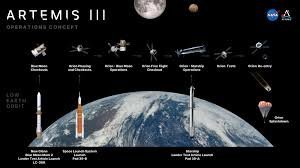
- Artemis III (2027): This will be a high-stakes test flight. Four astronauts will travel aboard the Orion spacecraft, launched by the powerful Space Launch System (SLS) rocket. This 14-day mission in Earth orbit will test critical docking and rendezvous operations between Orion and lunar lander vehicles from industry giants SpaceX and Blue Origin.
- Artemis IV (2028): This is the big one. NASA targets a full Moon landing mission in 2028, carrying astronauts from the Kennedy Space Center in Florida to the lunar surface.
Strategic Partnerships: SpaceX and Blue Origin
NASA isn’t going alone. By collaborating with private industry leaders, the agency is reducing risk and increasing flexibility. Both SpaceX and Blue Origin have redesigned their lunar landers to be more efficient:
- n
- SpaceX’s Starship: Designed to refuel in Earth orbit before rendezvous with Orion to transport the crew to the Moon.
- Blue Origin’s Blue Moon: Utilizing transfer stages in Earth orbit to push the Mark 2 lander toward a closer lunar orbit for the final descent.
Innovation and Efficiency: Doing More with Less
One of the most impressive updates is NASA’s return to its core technical competencies. Rather than relying solely on outside vendors, the agency recently redesigned and built a critical fuel-line component in-house. The result? A production timeline cut in half and a cost reduction to roughly one-tenth of the original vendor estimate.
Furthermore, NASA is partnering with Axiom Space to introduce the “Sortie suit.” This lightweight design is specifically engineered for the first moonwalks, allowing astronauts to move faster and more agilely during early surface missions without replacing the heavier suits intended for long-term exploration.
Beyond the Horizon: The Lunar South Pole and Mars
The destination isn’t just “the Moon,” but specifically the lunar South Pole. This region is of immense scientific interest and will be the site of increasingly complex missions. By building an enduring presence here, NASA is not only driving economic benefits and scientific discovery but is also testing the survival and operational limits required for the eventual voyage to Mars.
For more detailed information on the mission milestones, you can visit the official NASA Artemis website.
Quick Summary of the Artemis Roadmap
| Mission | Target Date | Primary Objective |
|---|---|---|
| Artemis III | 2027 | Earth orbit testing & lander rendezvous |
| Artemis IV | 2028 | Crewed lunar surface landing |
📰 You May Also Like