Asteroid Secrets Revealed: How NASA’s OSIRIS-REx Rewrote Cosmic History
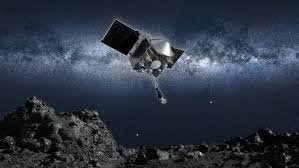
Few cosmic endeavors have reshaped our understanding of the solar system quite like the historic mission to asteroid Bennu. Spearheaded by the University of Arizona in collaboration with NASA, the pioneering OSIRIS-REx spacecraft successfully accomplished what once sounded like science fiction: journeying millions of miles into deep space, collecting pristine material from a primordial asteroid, and returning it safely to Earth.
While the initial Bennu sample return segment has reached its official conclusion, the scientific revelations locked within those 4.3 ounces of cosmic rock and dust are just beginning to transform astrophysics, planetary defense, and our understanding of the origin of life.
The Shocking Physics of Asteroid Bennu: A World Like Fluid
Before OSIRIS-REx made physical contact with Bennu in October 2020, scientists expected a firm, gravel-packed surface resembling a packed dirt road. What they encountered instead left the global scientific community astounded.
When the spacecraft’s Touch-and-Go Sample Acquisition Mechanism (TAGSAM) touched down, it met virtually zero resistance. Bennu’s surface behaved more like a fluid than a solid. Had the probe not fired its thrusters instantly upon contact, it would have plunged straight into the core of the asteroid. The loosely bound boulders and granular regolith behave like a cosmic ball pit, held together only by the gentlest whispers of microgravity.
Seeds of Oceans and Life: What the Samples Tell Us
Long before Earth possessed vibrant oceans or breathable skies, the basic building blocks of our world were adrift in interplanetary space. Analysis of the Bennu samples at institutions like the University of Arizona has unveiled incredible insights:
- Ancient Hydration: Bennu’s clay minerals are heavily saturated with water, delivering compelling proof that early asteroid bombardments likely delivered the bulk of Earth’s surface water.
- Prebiotic Organic Matter: Researchers detected abundant carbon alongside extraterrestrial amino acids and interstellar stardust—organic precursors essential for life that formed before Earth consolidated into a planet.
- Warm Ancestral Conditions: The presence of rare evaporite minerals indicates that Bennu’s larger parent asteroid once hosted circulating liquid water for millennia before being obliterated in a catastrophic collision.
Planetary Defense: Calculating the Impact Odds
Beyond tracing our ancient origins, studying near-Earth asteroids is critical for the long-term survival of human civilization. Bennu remains classified as one of the two most potentially hazardous known objects in the solar system, alongside asteroid 1950 DA.
Thanks to the millimeter-precise navigational data gathered by the OSIRIS-REx mission, astronomers have refined Bennu’s orbital trajectory through the year 2300. The calculated cumulative impact probability now stands at a reassuringly low 1 in 1,750 (0.057%), vastly improving our predictive models for planetary defense against potential future threats.
The Mission Continues: Destination Asteroid Apophis
The spacecraft’s journey is far from over. Rather than retiring the resilient probe, NASA has redesignated the mission as OSIRIS-APEX (OSIRIS-Apophis Explorer). Guided by the Lunar and Planetary Laboratory, the spacecraft is now bound for asteroid Apophis.
In 2029, Apophis will make an exceptionally close flyby of Earth, passing well inside the orbit of our geostationary satellites. OSIRIS-APEX will be on the front lines to observe how planetary gravity twists, stretches, and alters an asteroid in real time—opening the next thrilling chapter in deep-space exploration.
📰 You May Also Like