From the Gutters of New York to the Pinnacle of Hollywood
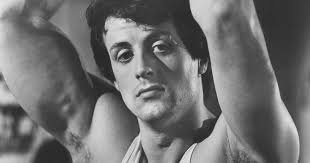
Before he became the face of the ultimate cinematic underdog, Sylvester Stallone fought a real-life battle for survival that would make any movie script seem tame. Long before the fame, the fortune, and the iconic punchlines, Stallone lived a life defined by hardship, resilience, and an unwavering belief in his own vision.
Growing up in the tough neighborhood of Hell’s Kitchen in New York, Stallone’s early years were far from glamorous. Sent to a boarding house at a young age and raised by parents who struggled to express affection, he learned early on that life doesn’t give handouts. This “hard-knocks” upbringing became the fuel for the fire that would eventually ignite his career.
The Darkest Hours: Pizza Boxes and Lion Cages
The road to stardom was paved with desperation. In his early days as a starving actor in the Big Apple, Stallone’s living conditions were dire. In a recent reflection, he recalled the absurdity of his struggle:
- n
- Extreme Poverty: He once used pizza boxes as a makeshift mattress.
- Gritty Jobs: He spent his days cleaning lion cages at the Central Park Zoo, often returning home smelling like the animals he felt so much empathy for.
- Emotional Isolation: A childhood devoid of hugs and warmth that forced him to find strength within himself.
The Divine Spark: The Birth of Rocky Balboa
The turning point came in March 1975. In a burst of what he describes as “divine guidance,” Stallone wrote the script for Rocky in just three and a half days. However, writing the script was only the beginning of the battle.
Flat broke and having gone to the extreme of selling his beloved dog, Butkus, just to afford food, Stallone faced a heartbreaking dilemma. Producers offered him upwards of $360,000 for the script—a fortune at the time—but on one condition: he could not play the lead role.
Stallone refused. He knew that this was his one shot at destiny. He chose poverty over a paycheck, insisting that he be the one to bring Rocky Balboa to life. His gamble paid off, resulting in a cultural phenomenon and three Academy Awards, including Best Picture.
The Fall and the Resurrection
Success wasn’t a straight line. By the 1990s, Stallone found himself in a professional wilderness. He describes this period as being “artistically dead,” where he felt like an irrelevant guest at parties for nearly six years.
How did he come back? The pen. In 2006, Stallone returned to his roots as a writer and director with Rocky Balboa. The film was a critical and commercial smash, proving that his ability to beat the odds wasn’t just a character trait for his movies, but a reality of his life.
A Legacy of Resilience and Family
Today, Sylvester Stallone remains a powerhouse in the entertainment industry. He is one of the few actors to have starred in a #1 box office film in six consecutive decades—a feat shared only with Harrison Ford. From the hit series Tulsa King on Paramount+ to his upcoming memoir, “The Steps”, he continues to evolve.
Beyond the screen, Stallone credits his wife, Jennifer Flavin, for keeping him grounded and alive, emphasizing that the greatest gifts are often right in front of us.
Final Thoughts: The Battlefield of Life
Looking back at New York, Stallone doesn’t see a romanticized city, but a battlefield. His journey from the cracks in the pavement to the luxury of a penthouse is a testament to the power of persistence. As he puts it with a laugh: “Look at me now!”