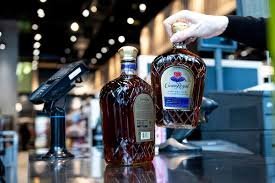
The Great Booze Battle: Understanding the US Ban on Canadian Liquor
In a move that has sent shockwaves through the North American beverage industry, the Trump administration’s Canadian liquor restrictions have officially taken effect. This unprecedented ban marks a significant breakdown in one of the world’s most stable and lucrative trading partnerships, turning a shared love for spirits into a political battlefield.
The restrictions target approximately $800 million worth of Canadian alcoholic beverages imported into the US last year. This isn’t just a policy shift; it is the latest salvo in a high-stakes “tit-for-tat” trade war that has already seen skyrocketing tariffs and retaliatory bans on US alcohol within various Canadian provinces.
Will Your Favourite Bottle Vanish from Shelves?
For the average American consumer, the impact might not be felt instantly. Industry experts suggest that several factors are cushioning the immediate blow:
- n
- Strategic Stockpiling: Many distributors ramped up their inventory before the ban’s deadline.
- Legal Exemptions: There are specific workarounds that allow some products to bypass the restrictions.
- The Bulk Loophole: Whisky and liqueurs sold in containers larger than four litres remain exempt from the ban and tariffs.
However, this “bulk loophole” comes with a catch. To utilize it, companies must source larger containers and rebottle the spirits into smaller, retail-friendly sizes. This additional logistical layer increases overhead costs—costs that will likely be passed down to the consumer.
The Strategy: Using the Smoot-Hawley Tariff Act
To implement these Canadian liquor restrictions, the Trump administration is invoking Section 338 of the Smoot-Hawley Tariff Act of 1930. For history buffs, this is the same legislation that worsened the Great Depression—a fact famously referenced in pop culture.
The law grants the US President the authority to impose tariffs up to 50% or enact full import bans if another country is deemed to be discriminating against US commerce. Because this law hasn’t been used in this specific manner for decades, it represents a drastic deviation from traditional US trade policy.
Economic Fallout: A Double-Edged Sword
While the US is leveraging the ban as a bargaining chip, the economic damage is widespread. The Peterson Institute for International Economics notes that using import bans against a close ally is a symbolic escalation designed to force negotiators back to the table.
The numbers tell a grim story:
- n
- Canadian Vulnerability: Approximately 93% of all Canadian spirits are exported to the US. For Canadian distillers, this ban could be devastating.
- US Losses: US spirits exports to Canada plummeted by 70% after Canadian provinces began removing US products from shelves in early 2025.
- Beyond Booze: The trade war has expanded to include other Canadian exports, such as motorcycles and dairy products (specifically whey), totalling nearly $1 billion in affected goods.
Industry Reaction: “Competing by Sip, Not Tariffs”
The sentiment among industry leaders is one of frustration. Chris Swonger, CEO of the Distilled Spirits Council of the United States (DISCUS), expressed dismay, stating that the industry has been unfairly dragged into a political dispute. “We like to compete by sip and taste, not tariffs,” Swonger remarked, urging both governments to reach a resolution.
On the ground, the tension is palpable. Store managers in border towns from New York to Michigan report a decline in Canadian foot traffic and a growing concern that the “freedom to drink” is being sacrificed for political leverage.
What’s Next for US-Canada Trade?
President Trump remains confident that the US will emerge victorious, predicting that Canada will soon offer a deal to remove all tariffs. Meanwhile, Canadian leadership remains cautious, with no immediate sign of surrender. As the midterms approach, the timeline for a resolution remains uncertain, leaving the alcohol industry caught in the crossfire of a diplomatic storm.