
Venezuela’s Political Crossroads: Delcy Rodríguez’s UN Address and the Quest for Change
The political landscape in Venezuela has reached a boiling point. In a move that has captured global attention and dominated headlines across networks like Univision, interim president Delcy Rodríguez recently delivered her first address to the United Nations General Assembly. This appearance comes at a critical juncture, following the dramatic events of January 2026, when United States armed forces forcibly removed President Nicolás Maduro from power.
The Promise of Elections vs. Reality
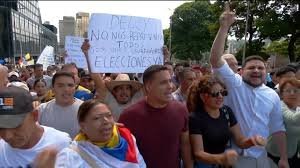
During her speech, Rodríguez attempted to project stability and a path toward normalization. Her central promise? That Venezuela will hold elections, but only when the “moment is right.” However, this vague timeline has left both the international community and the Venezuelan people skeptical. While the rhetoric at the UN focuses on diplomacy, the streets of Caracas tell a different story.
The Struggle for Leadership: The Case of María Corina Machado
One of the most pressing demands from the residents of Caracas is the immediate return of opposition leader María Corina Machado. Despite her prominence, Machado has been blocked from entering Venezuela on three separate occasions, raising questions about the true nature of the current administration’s openness to opposition.
The relationship between Machado and U.S. leadership has been complex. In the past, she maintained a close bond with Donald Trump, urging the U.S. to employ force to overthrow the Venezuelan government—a relationship highlighted when she presented Trump with her Nobel Peace Prize. Yet, following Maduro’s capture, Machado seems to have been sidelined by U.S. officials, leaving a power vacuum in the opposition movement.
The Voice of the People: Is There Really Any Change?
Beyond the high-level political maneuvering, the daily reality for Venezuelans remains grim. Many citizens feel that the change of leadership at the top has not trickled down to the average household. Rosa Cacique, a supporter of the opposition in Caracas, expressed a sentiment shared by many:
“Unfortunately, Donald Trump’s hand is in this. We are not fools; we see exactly what is happening. They talk about change, but my God, what change? Salaries remain the same, hospitals still lack basic supplies, and prisoners remain imprisoned. I don’t see the change.”
Key Points of the Current Venezuelan Crisis
- UN Diplomacy: Delcy Rodríguez promises elections but provides no specific date.
- US Intervention: The forced removal of Nicolás Maduro in January 2026 redefined regional geopolitics.
- Opposition Limbo: María Corina Machado remains exiled despite her previous influence with the U.S. administration.
- Social Stagnation: Critical shortages in healthcare and stagnant wages continue to plague the population.
As the world watches, the question remains: will Venezuela truly transition toward a sustainable democracy, or is this merely a shift in the faces of power? For those following the latest updates via Univision and other global outlets, the situation remains volatile and deeply uncertain.



