
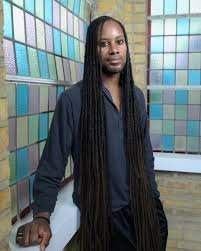
The Paradox of a Prodigy: Understanding the Jason Arday Controversy
Jason Arday was once hailed as an academic superstar. As the youngest Black professor in the history of Cambridge University, his trajectory seemed like a triumph of resilience and intellect. However, the narrative has recently shifted from one of inspiration to one of intense scrutiny. From allegations of academic misconduct to disputed claims about his personal life, Arday finds himself at the center of a storm that touches upon race, integrity, and the fragile nature of modern academia.
The Plagiarism Row: Academic Integrity Under Fire
The controversy ignited when reports surfaced suggesting significant similarities between Arday’s PhD thesis and a previous work by Paula Zwozdiak-Myers. According to reports from The Telegraph and analysis by academic Nathan Cofnas, over 100 passages in Arday’s work were allegedly lifted with minimal editing.
This sparked a fierce debate within the academic community:
- n
- The Defense: Cambridge University and several supporters described the accusations as a “vile smear campaign” intended to delegitimize a successful Black academic.
- The Critique: Some peers, including other academics of color, expressed concern that ignoring potential plagiarism could undermine the credibility of race studies in Britain.
- The Verdict: While Liverpool John Moores University (where he completed his PhD) found no plagiarism, the divide in opinion remains stark.
The “Playbook” and the Weaponization of Scrutiny
Arday has frequently spoken about a “playbook” used by conservative activists to target Black academics. He argues that instruments designed to protect academic integrity are being weaponized to bring down high-profile figures of color, citing the forced resignation of Harvard’s Claudine Gay as a primary example.
For Arday, the scrutiny is not about the work, but about a systemic effort to eradicate diversity from elite institutions. He has called upon his peers to stand against what he describes as an “evil” trend of targeted harassment.
Fact-Checking the Legend: Charity and Endurance Feats
Beyond the lecture halls, Jason Arday’s personal history has become a point of contention. His forthcoming memoir, Great and Unfortunate Things, details a life of overcoming autism and developmental delays. However, specific claims have come under fire:
- n
- The 600-Mile Challenge: Arday previously claimed to have run 600 miles in six days. Later corrections revealed the feat actually took 12 days.
- Charity Fundraising: While he claimed to have raised upwards of £5 million for charity, critics question the veracity of this figure for a non-celebrity. Arday attributes this to “fundraising collectives” and cites NDAs as a reason for not disclosing further details.
Extreme Allegations and Police Discrepancies
Perhaps the most jarring part of the story involves Arday’s claims of physical abuse. He has alleged that he was threatened with knives, sent bullets in the mail, and that a severed pig’s head was delivered to his family home.
However, an investigation by The Guardian revealed significant discrepancies. When journalists contacted the local butchers mentioned in Arday’s story, they denied any police inquiries. Furthermore, the Metropolitan Police stated that reports of an investigation into the “pig’s head” incident were “categorically” incorrect.
What This Means for the Sociology of Education
The case of Jason Arday is more than a personal scandal; it is a litmus test for the British Sociological Association and the broader field of race studies. Professor John Preston of the University of Essex noted that because the sociology of education is a “fragile” field, it is imperative that these claims are addressed transparently to protect the discipline’s future.
As Arday reflects on his journey, he compares himself to Icarus, wondering if he “flew too close to the sun.” Whether he is a victim of a coordinated racial campaign or a man who built his reputation on exaggerated claims, the fallout continues to send shockwaves through the ivory towers of Cambridge.



