
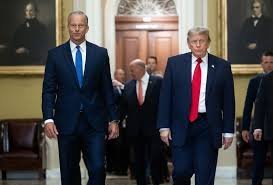
The Great Divide: Analyzing the John Thune and Donald Trump Communication Gap
In the high-stakes world of Washington D.C., access to the President is the ultimate political currency. While House Speaker Mike Johnson often finds himself on the phone with Donald Trump at all hours—from midday strategy sessions to midnight calls—the situation for Senate Majority Leader John Thune is starkly different.
The John Thune Donald Trump communication dynamic has shifted from occasional collaboration to a cold, “as-needed” basis. In some instances, weeks pass without a single direct conversation, leaving Thune to learn about the President’s latest directives or criticisms via Truth Social and mainstream media outlets. This widening gulf is not just a personal clash of styles; it is a systemic risk for the Republican party.
A Clash of Leadership Styles
The tension stems from a fundamental difference in temperament. John Thune is described as mild-mannered and direct, often providing the President with blunt assessments of what is realistically achievable within the U.S. Senate. In contrast, Donald Trump operates with a mercurial, executive-style approach, expecting immediate results and absolute loyalty.
Several key friction points have exacerbated this relationship:
- n
- The Filibuster: Trump has loudly demanded the abolition of the filibuster to push through his agenda, a move Thune has repeatedly rejected to protect future GOP minority interests.
- The SAVE America Act: Despite the Senate’s rejection of the voting restrictions bill, Trump continues to pressure Thune to force it through.
- Budget Maneuvers: Trump’s desire to use a complex budget process (the “vote-a-rama”) to advance his priorities conflicts with Thune’s priority of simply keeping the government open.
The Missing Link: The Role of Lindsey Graham
Insiders suggest that the relationship was previously held together by a crucial “linchpin”: the late Senator Lindsey Graham. As a close confidant to both Thune and Trump, Graham served as the essential bridge, smoothing over disagreements and translating expectations between the two men. With Graham gone, the buffer has vanished, leaving the two leaders to face their ideological and stylistic differences head-on.
Political Fallout and Midterm Anxiety
This internal friction is creating a “circular firing squad” within the GOP. While a small group of MAGA-aligned Republicans side squarely with the President, the majority of Senate Republicans remain in Thune’s corner. The result is a fragmented front heading into a volatile election season.
Senators like Jim Justice have warned that this infighting is counterproductive. If the leadership cannot find a way to synchronize, the GOP risks losing critical seats in the midterms, which would ultimately hinder the President’s own legislative goals. As Senator Lisa Murkowski noted, the political wisdom of forcing high-tension votes during a recess is highly questionable.
The Bottom Line: A Relationship at an Inflection Point
As the Senate approaches its recess, the tension has reached a breaking point. Trump has recently refused to give Thune a vote of confidence, suggesting that Thune’s future in leadership may depend on his ability to deliver the President’s specific demands. Thune’s response? A simple reminder that the President does not vote in Senate elections.
Whether this communication breakdown can be repaired or if it will lead to a full-scale leadership purge remains to be seen. However, one thing is clear: the stability of the Republican agenda depends on whether these two powerful men can finally get on the same page.



