SpaceX Rocket Moon Crash: An Accidental Celestial Collision
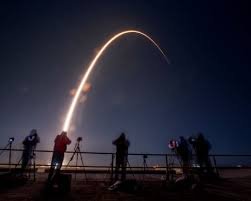
In a rare astronomical event that blends space exploration with the challenges of orbital debris, a drifting SpaceX rocket upper stage is on an unintentional collision course with the moon. What started as a mission to deliver lunar landers over a year ago has turned into a scientific opportunity for researchers and sky gazers worldwide.
The Physics of the Impact: Speed and Power
This isn’t just a gentle nudge. According to space tracking expert Bill Gray, the rocket stage is expected to slam into the lunar surface at a staggering 5,400 mph (8,700 km/h). To put that into perspective, that is roughly seven times the speed of sound.
The impact is predicted to occur near the Einstein Crater on the moon’s sunlit western limb. Experts estimate the crash will release energy equivalent to three tons of TNT explosives, creating a plume of dust and rubble that will stretch for several miles into space.
Can You See the SpaceX Rocket Moon Crash?
If you are located in the eastern portions of Canada, the US, or parts of South America, you have the best vantage point for the aftermath. While the initial impact flash will likely be too dim for the naked eye, the resulting stream of ejected material should remain visible through telescopes for several tens of minutes.
Key Details for Observers:
- n
- Expected Crater Size: Approximately 90 feet across and 16 feet deep.
- Visuals: High-powered telescopes are recommended to spot the dust plume.
- Timing: The event is expected to unfold in the early morning hours.
n
n
n
The Growing Concern of Space Junk
While this specific event is being treated as a scientific curiosity, it highlights a more pressing issue: the increasing amount of “space junk” in our orbit. As more private and government entities launch satellites and probes, the celestial neighborhood is becoming dangerously crowded.
“Things are getting crowded up there,” warns Bill Gray, who plans to observe the event from New Brunswick, Canada. Space experts suggest that this crash could have been avoided if the upper stage had been intentionally nudged into a solar orbit instead of being left to drift.
Why This Matters for Future Astronauts
Beyond the spectacle, scientists are using this event to gather critical data. Benjamin Fernando from the Los Alamos National Laboratory emphasizes that understanding how debris impacts the lunar surface is vital for the safety of future lunar missions. Because the moon has low gravity and no wind to clear away dust, the impact site will serve as a long-term case study on debris hazards for future astronauts.
To ensure precise data collection, high-authority agencies are on standby. NASA’s Lunar Reconnaissance Orbiter and South Korea’s Danuri lunar orbiter will be capturing before-and-after images of the crash site to analyze the structural damage to the lunar crust.
For more updates on space flight and orbital mechanics, you can follow the latest missions at SpaceX.