The Chicxulub Crater: How a ‘Heat Blanket’ of Dust Baked the Earth and Wiped Out the Dinosaurs
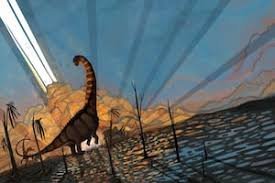
The Chicxulub Crater: How a ‘Heat Blanket’ of Dust Baked the Earth and Wiped Out the Dinosaurs
For decades, we have known that a massive asteroid slammed into the Earth 66 million years ago, leaving behind the colossal Chicxulub crater near Mexico’s Yucatan Peninsula. While the initial impact triggered devastating tsunamis and earthquakes, new research suggests the true horror began after the dust settled.
A groundbreaking study from Purdue University, published in the Journal of Geophysical Research: Biogeosciences, reveals that the impact didn’t just destroy the immediate landscape—it wrapped the entire planet in a lethal, heat-trapping blanket of fine dust.
Beyond the Blast: The Science of a Planetary Oven
Most people imagine the end of the dinosaurs as a single, explosive moment. However, lead author Brandon Johnson explains that the kinetic energy of the asteroid had to go somewhere, and it eventually converted into intense heat. While the initial blast was catastrophic, the resulting atmospheric debris transformed a local disaster into a global extinction event.
The researchers identified two distinct types of debris that played a role in this catastrophe:
- n
- Spherules: Tiny rock droplets that cooled in the air and fell back to Earth, generating immense thermal energy.
- Fine Dust Particles: Microscopic particles (about 2.5 micrometres across) that created a nearly impermeable layer in the atmosphere.
This fine dust acted like a “lid on a pot,” preventing thermal radiation from escaping into space and reflecting it back toward the surface. As co-author Alexandria Johnson describes it, the planet was essentially being “charbroiled.”
A Living Hell: Why Only a Few Survived
The conditions on the surface were nothing short of nightmarish. According to the study, animals that could not find shelter underground or underwater were exposed to thermal radiation doses far beyond lethal limits. Johnson starkly noted that the Earth likely looked “more like Hell than like Venus.”
The Long-Term Aftermath
The devastation didn’t end with the heat. The research suggests that this dust cloud could have lingered in the atmosphere for years or even decades, leading to:
- n
- Widespread Wildfires: The extreme temperatures ignited forests globally.
- Respiratory Failure: The particles were small enough to be inhaled deep into the lungs of any surviving creatures, posing long-term health risks.
- Total Ecosystem Collapse: The combination of fire, heat, and pollution wiped out roughly three-quarters of all species on Earth.
Understanding the Legacy of the Chicxulub Crater
By analyzing the Chicxulub crater and the atmospheric effects of its creation, scientists are gaining a clearer picture of how planetary catastrophes function. This research highlights the fragility of life when faced with sudden, extreme atmospheric shifts.
For more information on asteroid impacts and planetary defense, you can explore the resources provided by NASA, which continues to monitor Near-Earth Objects to ensure our planet doesn’t face a similar fate.
📰 You May Also Like