
Abdul El-Sayed: The Progressive Surge Shaping Michigan’s Political Future
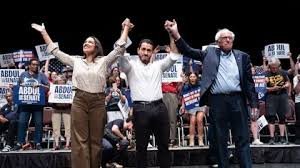
In the heart of Detroit, amidst the historic grandeur of the 104-year-old Opera House, a new political energy is igniting. The atmosphere was electric as Senator Bernie Sanders and Representative Alexandria Ocasio-Cortez took the stage to champion Abdul El-Sayed, a physician and progressive firebrand running for a crucial U.S. Senate seat in Michigan.
El-Sayed isn’t just running a campaign; he is leading a movement. His platform, centered on the bold promise of “Medicare for All,” speaks to a growing segment of the electorate tired of the status quo. But as the primary approaches, El-Sayed finds himself at the center of a tug-of-war for the soul of the Democratic Party.
The Clash of Ideologies: Progressive vs. Establishment
The race for the Senate nomination has become a microcosm of the broader divide within the Democratic Party. On one side is Abdul El-Sayed, representing the left wing—a faction that advocates for systemic change and grassroots power. On the other is Congresswoman Haley Stevens, a moderate seasoned in the halls of power and backed by significant corporate funding.
- n
- The Progressive Vision: Driven by universal healthcare, a wealth tax on billionaires, and a pivot away from corporate influence in politics.
- The Moderate Strategy: Focused on experience, institutional stability, and a more cautious approach to policy shifts to ensure broad electability.
Healthcare and Affordability: The Heart of the Campaign
For many Michigan voters, the political debate is personal. With the rising costs of groceries, gas, and housing, El-Sayed’s focus on affordability resonates deeply. By leveraging his background as a former health director, he argues that the government must prioritize people over profits.
According to recent data from Gallup, party favourability among Democrats has seen a decline, suggesting that voters are hungry for a new direction. For citizens who have been forced to sacrifice healthcare to afford basic necessities, El-Sayed’s “Medicare for All” isn’t just a slogan—it’s a lifeline.
The Geopolitical Pivot and the Michigan Electorate
One of the most contentious points of the campaign is the stance on U.S. foreign policy, particularly regarding the conflict in Gaza. As the son of Egyptian immigrants, El-Sayed has been vocal in his opposition to unconditional U.S. aid to Israel, labeling the military campaign in Gaza as a genocide.
This position is strategically significant in Michigan, which boasts one of the largest Arab-American populations in the United States. While moderate candidates like Haley Stevens maintain support for traditional alliances, El-Sayed is tapping into a vein of disillusionment among voters who felt unheard during previous election cycles.
Can the Progressive Wave Win in the Midwest?
While progressives have seen victories in urban hubs like New York City, the question remains: can this momentum translate to the “purple” areas of the Midwest? Political strategists are divided. Some argue that El-Sayed represents the “politics of the future,” while critics worry that his radical platform might alienate moderate working-class voters who are essential for a general election victory.
As Michigan prepares for the primary on August 4, the outcome will send a powerful signal to the rest of the country. If El-Sayed prevails, it will prove that a bold, left-wing agenda can win over a diverse electorate. If not, the Democratic Party may struggle to bridge the gap between its centrist and progressive wings before the next major election cycle.
Key Takeaways from the El-Sayed Campaign:
- Universal Healthcare: A central pillar aiming to decouple health insurance from employment.
- Economic Reform: Proposing a wealth tax to reduce inequality.
- Foreign Policy Shift: Challenging traditional U.S. involvement in the Middle East.
- Grassroots Engagement: Utilizing social media and direct canvassing to energize millennial and Gen Z voters.
Whether you view him as a visionary or a risk, Abdul El-Sayed is undeniably forcing a conversation about what the Democratic Party must become to remain relevant in a rapidly changing political landscape.



