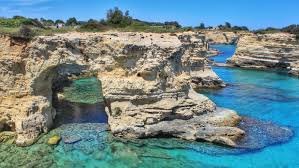
Lovers’ Arch Collapses: A Valentine’s Day Tragedy in Italy
A beloved Italian coastal landmark, known as “Lovers’ Arch,” tragically collapsed during heavy storms on Valentine’s Day, leaving locals and tourists heartbroken. The event, described by one local official as “a blow to the heart,” marks the end of an era for the picturesque site.
A Symbol of Romance Lost
The Faraglioni di Sant’Andrea, located on the Salento coast – the heel of Italy’s “boot” – has been a magnet for couples for centuries. Traditionally, lovers would propose marriage, share their first kiss, or celebrate their unions under the arch. Local legend held that a kiss beneath the arch guaranteed eternal love. The arch, sculpted by centuries of wind and waves against the Calcarenite cliffs, wasn’t just a geological formation; it was a symbol of enduring affection.
The Storm and the Collapse
A powerful storm that swept across southern Italy over the weekend proved too much for the arch’s fragile structure. The relentless force of the waves caused the arch to crumble, reducing it to a pile of rubble. The collapse has dealt a “devastating blow to the image of Salento and to tourism,” according to Maurizio Cisternino, the mayor of Melendugno.
From Pirate Lookout to Lovers’ Paradise
Originally a strategic lookout point used to warn of pirate attacks, the site transformed into a haven for romance during the late 18th century. In recent years, the arch’s beauty has been amplified by social media, particularly Instagram, drawing thousands of couples eager to capture their love against the stunning backdrop. While an exact count is impossible due to its public accessibility, the arch’s popularity was undeniable.
Personal Stories of Loss
Lorenzo Barlato, a local resident, shared his poignant story on Facebook. He proposed to his wife on the clifftop overlooking the arch over 40 years ago and they frequently returned for anniversaries. “I couldn’t wait to return,” he wrote after the collapse. “Now, unfortunately, all I have left are the many beautiful photos I took of that piece of paradise.” His story is just one of many reflecting the deep emotional connection people had with this landmark.
Climate Change and Coastal Erosion
The collapse is being linked to the increasing frequency and intensity of extreme weather events, potentially exacerbated by warmer sea temperatures and climate change. The arch had already sustained damage from Cyclone Harry in January. Concerns about the landmark’s fragility have been raised for years, and in 2024, local authorities applied for a $4.5 million grant for a preservation project, but were unsuccessful.
A Tragedy Foreseen
“It’s a tragedy we knew was inevitable, we just didn’t expect it to happen so soon,” Cisternino told local media. He acknowledged that “nature has reclaimed the arch, just as it created it,” emphasizing the need for resources to address coastal erosion along the entire coastline. He added, “Nature has been transformed: what was there 30 years ago is no longer there.”
Part of a Larger Pattern
The collapse of Lovers’ Arch is part of a broader pattern of extreme weather events impacting southern Italy. Recent weeks have seen violent storms, landslides (including one in Sicily that saw houses fall into a ravine), and widespread flooding, tragically resulting in several fatalities.
The Future of the Site
The remnants of the arch will be left to be washed away by the sea, a somber conclusion to its story. Francesco Stella, Puglia tourism councillor, described the scene as “like a funeral” for what was once considered one of Italy’s happiest places.
Source: CNN