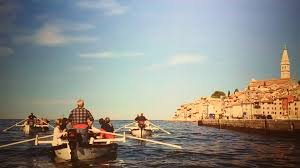
A Journey into the Heart of Rovinj’s Maritime Heritage: The Batana Boat
For centuries, the Adriatic Sea has been graced by the presence of traditional boats, particularly off the coasts of Venice, the Marche region, Istria, and Dalmatia. In Rovinj, a picturesque Croatian port on the western Istrian peninsula, these vessels were once a vibrant part of daily life. Ninety-eight ‘batane’ once sailed these waters, each distinguished by a uniquely coloured sail – a symbol of family pride.
The Batana: More Than Just a Boat
Today, the legacy of the ‘batana’ lives on at an ecomuseum recognized by UNESCO as a best practice for safeguarding intangible heritage. The Casa della Batana, a 17th-century building near the sea, has been open to the public for 22 years, serving as a centre for documentation and the revival of this iconic boat that has connected communities and provided livelihoods for generations.
“These boats originated in the Marche region, and in Rovinj in the 17th century, they were fitted with a sail to make them recognizable,” explains director Nives Giuricin. The ecomuseum features a multi-award-winning interactive installation, “Viaggio in batana” (Journey in Batana), which transports visitors back to the early 20th century, immersing them in the lives of Rovinj fishermen.
An Immersive Experience
Through simultaneous and synchronized audiovisual projections – on the floor, ceiling, and front wall – visitors experience the world of stellar navigation, the local dialect, the culture of singing, and the diverse marine life (sole, sea bass, cuttlefish, and red mullet) and fishing techniques. The exhibit also pays tribute to Maria Spongia, the first woman to own a batana, and the emancipated women of the era, the tobacco workers, elegantly dressed for work.
Beyond the interactive installation and educational workshops, the museum showcases the history of traditional shipbuilding and the everyday life of Rovinj – an economy built on fishing, net making, and fish sales, alongside moments of leisure and social interaction. It also celebrates the city’s literary and poetic heritage.
The Anatomy of a Batana
The batana boasts a slightly curved flat bottom, tapering towards the bow and stern. Its size varies between 4 and 8.5 meters. Entirely constructed from wood, the frame is typically made of oak, fir, pine, or spruce, with galvanized or handmade iron nails used for riveting. Traditionally propelled by sail and oars, or a small outboard motor, larger batane used a substantial mainsail for longer voyages. For fishing, they were maneuvered with two long oars, and the stern featured a rowing position similar to a gondola – known locally as a ‘vùga in gòndula’.
Reviving a Tradition
Since 2004, the ecomuseum and the City of Rovinj have actively promoted the construction of new batana boats. The skills involved in building and repairing these vessels have been inscribed on the List of Intangible Cultural Heritage of the Republic of Croatia. To date, seven batana boats have been rebuilt, and 36 others have been repaired and preserved.
“With the first rebuilt batana, we paraded in the Grand Canal in Venice as guests of the historical regatta,” recalls the director. “We have revived an ancient craft: today, Rovinj still has a ‘squerarolo’ (shipwright) active, with a couple of specialists dedicated to maintaining wooden boats.”
Experiencing the Batana Today
The revival of the batana has also brought a resurgence of traditions. Visitors can now enjoy romantic rowing tours around Rovinj, attend concerts of traditional Rovinj music, experience ethnic performances, and participate in forgotten activities like net repair, bottle weaving, and turban making. Don’t miss the Spàcio, a local version of a tavern or wine cellar, a unique feature of Rovinj’s identity. It’s a place where locals preserved, tasted, and sold wine, but also socialized, played cards, sang, and enjoyed themselves.
One such Spàcio, originally preserved, became an integral part of the Ecomuseum in 2006 and now hosts musical, gastronomic, and other events organized by the Casa della Batana. Here, you’ll find the finest fruits of the land and sea: local Malvasia and Terrano wines, homemade olive oil, fresh fish, and seafood caught by local fishermen. Open from early June to late September, Spàcio Matika is also available for groups on reservation.
This June will also mark the 20th anniversary of the Rovinj Regatta of traditional boats with mainsail and Latin sail.
Learn more about Rovinj and plan your visit!
© Riproduzione riservata