Tesla Autopilot: A Dangerous Reliance? DUI Arrest Raises Serious Questions
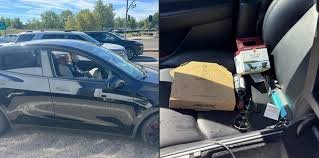
A recent incident in Vacaville, California, has once again brought the safety and marketing of Tesla’s Autopilot system into sharp focus. Police discovered a driver passed out behind the wheel of a Tesla, with the vehicle navigating busy streets on its own. The driver was subsequently arrested on suspicion of driving under the influence of both alcohol and marijuana.
This isn’t an isolated event. It’s part of a troubling pattern where Tesla owners appear to treat the automaker’s driver-assist systems as a substitute for a designated driver. And the core issue? Many believe Tesla’s marketing actively contributes to this dangerous misconception.
The Vacaville Incident: Details Emerge
According to the Vacaville Police Department, dispatchers received a call around 11 a.m. on March 25th from a concerned citizen who observed a driver slumped over and unresponsive at the wheel of a moving vehicle. The caller provided real-time updates, allowing officers to intercept the car near Elmira Road and Shasta Drive.
Initial assessments led police to suspect a medical emergency, but investigators quickly determined the driver was impaired. Evidence found inside the vehicle – a four-pack of wine and a pizza box – further supported this conclusion. The police department issued a statement reminding drivers that even with assistive driving features, they must remain conscious, alert, and sober while operating a vehicle.
A Recurring Problem: History of Autopilot Misuse
Electrek has been documenting instances of drivers misusing Tesla’s Autopilot and “Full Self-Driving” (FSD) capabilities for years. In 2018, a driver was found asleep at the wheel for approximately seven miles while using Autopilot. Another driver that same year attempted to use Autopilot as a defense after being found passed out. Even in 2021, a Tesla in Norway managed to self-stop after the driver lost consciousness, a situation initially framed positively but ultimately highlighting the same underlying problem.
More recently, a Tesla owner even bragged on video about driving drunk while using FSD, claiming the car was a safer driver. These incidents, while varying in location and specifics, share a common thread: a dangerous reliance on a system that is not designed for unsupervised operation.
The Confusion Around “Full Self-Driving”
The core of the issue lies in the ambiguity surrounding what FSD can and cannot do. Tesla and Elon Musk continue to push the boundaries of what’s possible, even releasing “robotaxi” plans based on the same Level 2 FSD technology currently available. This creates a perception that the system is far more capable than it actually is, leading to dangerous assumptions.
Critics argue that Tesla’s marketing tactics, including demo videos showcasing autonomous driving without human intervention, contribute to this confusion. After a decade of promises of full self-driving capabilities, some drivers are understandably led to believe their cars can handle the task.
Level 2 Systems: Driver Responsibility Remains Paramount
Let’s be clear: Autopilot and “Full Self-Driving (Supervised)” are Level 2 systems. This means the driver is legally and operationally responsible for the vehicle at all times. Falling asleep at the wheel is not a feature; it’s a failure mode that the driver monitoring system is intended to prevent. However, determined individuals often find ways to circumvent these safety measures.
Until Tesla delivers on true unsupervised autonomy or ceases to promote the illusion of it, these incidents are likely to continue. The community member who alerted authorities in Vacaville represents the true safety net, not the car itself, and certainly not an impaired driver.
What Needs to Change?
The question remains: how many more arrests, crashes, and lawsuits will it take for Tesla’s marketing to align with the reality of its technology? The current situation demands a more responsible approach to promoting driver-assist features and a clearer understanding of their limitations.
Resources: