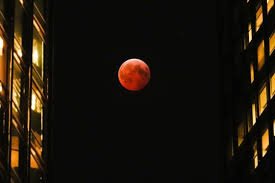
Full Moon March 2026: A Celestial Spectacle Awaits
Mark your calendars! A stunning total lunar eclipse, often referred to as a ‘blood moon’, will grace the skies in March 2026. This rare event promises a breathtaking display of celestial beauty, and you won’t want to miss it – as the next one isn’t scheduled until late 2028.
When and Where to Witness the Blood Moon
The eclipse will be fully visible on Tuesday morning from North America, Central America, and the western regions of South America. For our friends in Australia and eastern Asia, the spectacle will unfold Tuesday night. Those in Central Asia and much of South America will be able to observe the partial stages of the eclipse, where the moon appears to have bites taken out of it. Unfortunately, Africa and Europe will not have a view of this particular event.
Understanding Lunar Eclipses
Both solar and lunar eclipses occur due to the precise alignment of the sun, moon, and Earth. According to NASA, between four and seven eclipses occur each year. These events often cluster together, taking advantage of the optimal alignment in the orbits of these celestial bodies.
This March 2026 total lunar eclipse follows closely on the heels of a captivating ‘ring of fire’ solar eclipse that recently dazzled observers – and even penguins! – in Antarctica.
What Causes the ‘Blood Moon’ Effect?
During a total lunar eclipse, the Earth positions itself directly between the sun and the full moon, casting a shadow that completely covers the lunar surface. But why the reddish hue? The so-called ‘blood moon’ appearance is caused by stray bits of sunlight filtering through Earth’s atmosphere. This process scatters away most of the blue light, leaving the red wavelengths to reach the moon’s surface.
Experiencing the Eclipse
The eclipse unfolds over several hours, with the period of totality – when the moon is fully immersed in Earth’s shadow – lasting approximately one hour. “The lunar eclipse is a little more of a relaxed pace,” explains Catherine Miller at Middlebury College’s Mittelman Observatory, compared to the fleeting nature of a solar eclipse.
The best part? No special equipment is needed to observe this celestial event! Simply find a clear, cloudless view of the sky. Utilize a forecasting app or an online celestial calendar to determine the exact timing for your specific location.
Don’t feel you need to stay out for the entire duration. Astronomer Bennett Maruca with the University of Delaware suggests, “You don’t have to be out there the whole time to see the shadows moving.” Venture outside periodically to witness Earth’s shadow darken the moon, eventually revealing the stunning reddish-orange orb.
Looking Ahead: Another Partial Lunar Eclipse
If you miss this one, don’t despair! A partial lunar eclipse is scheduled for August, offering visibility across the Americas, Europe, Africa, and western Asia.
The Associated Press © 2026 NBCUniversal Media, LLC